In 1908 something flattened a Siberian forest and left no crater
On 30 June 1908 an explosion over central Siberia flattened the forest near the Podkamennaya Tunguska river. No crater and no fragment were ever found.
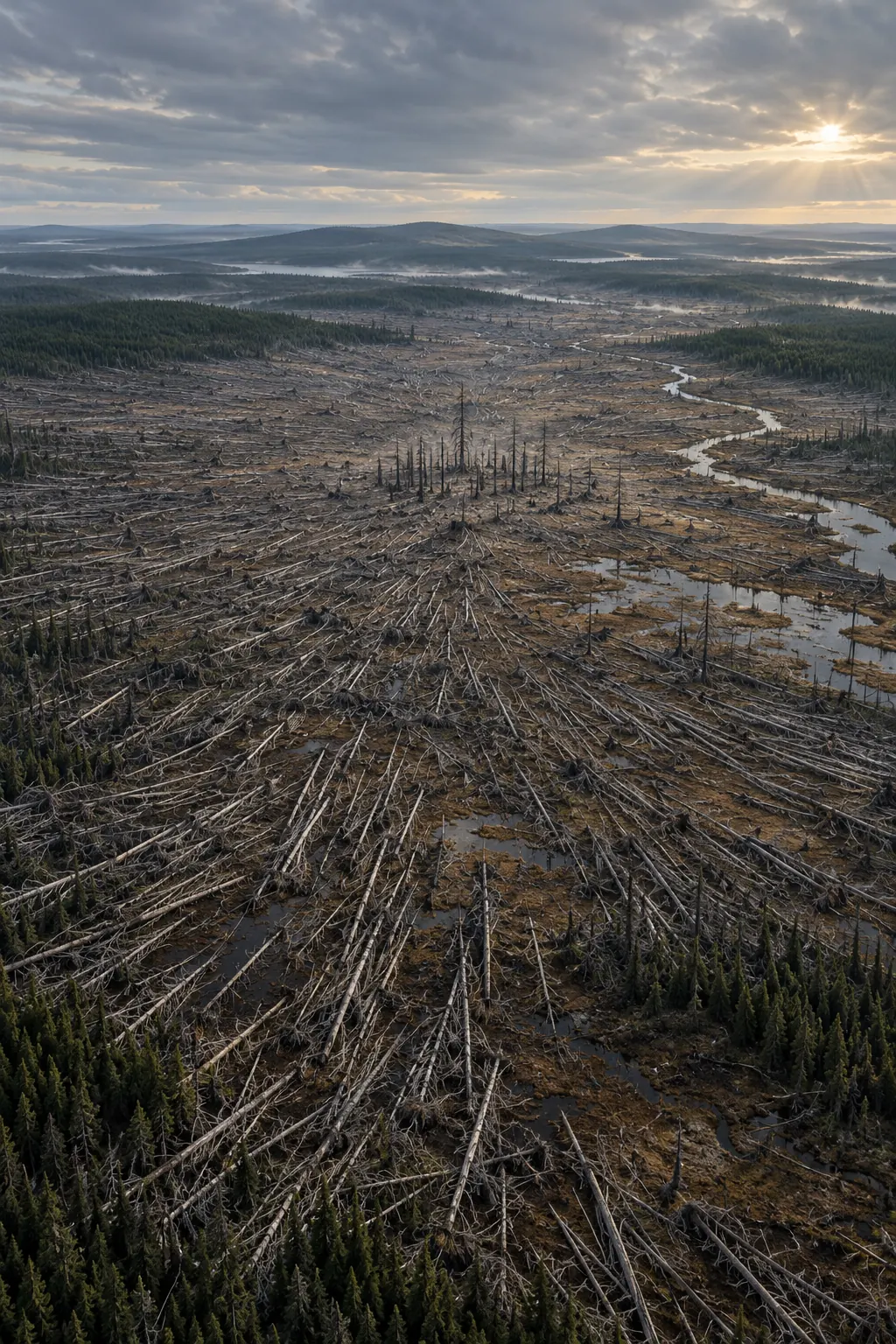
Why the blast that flattened a Siberian forest left no crater.

June 30, 1908, central Siberia in Russia. Something exploded in the deep forest near the Podkamennaya Tunguska river. Seismographs far away recorded the shock.
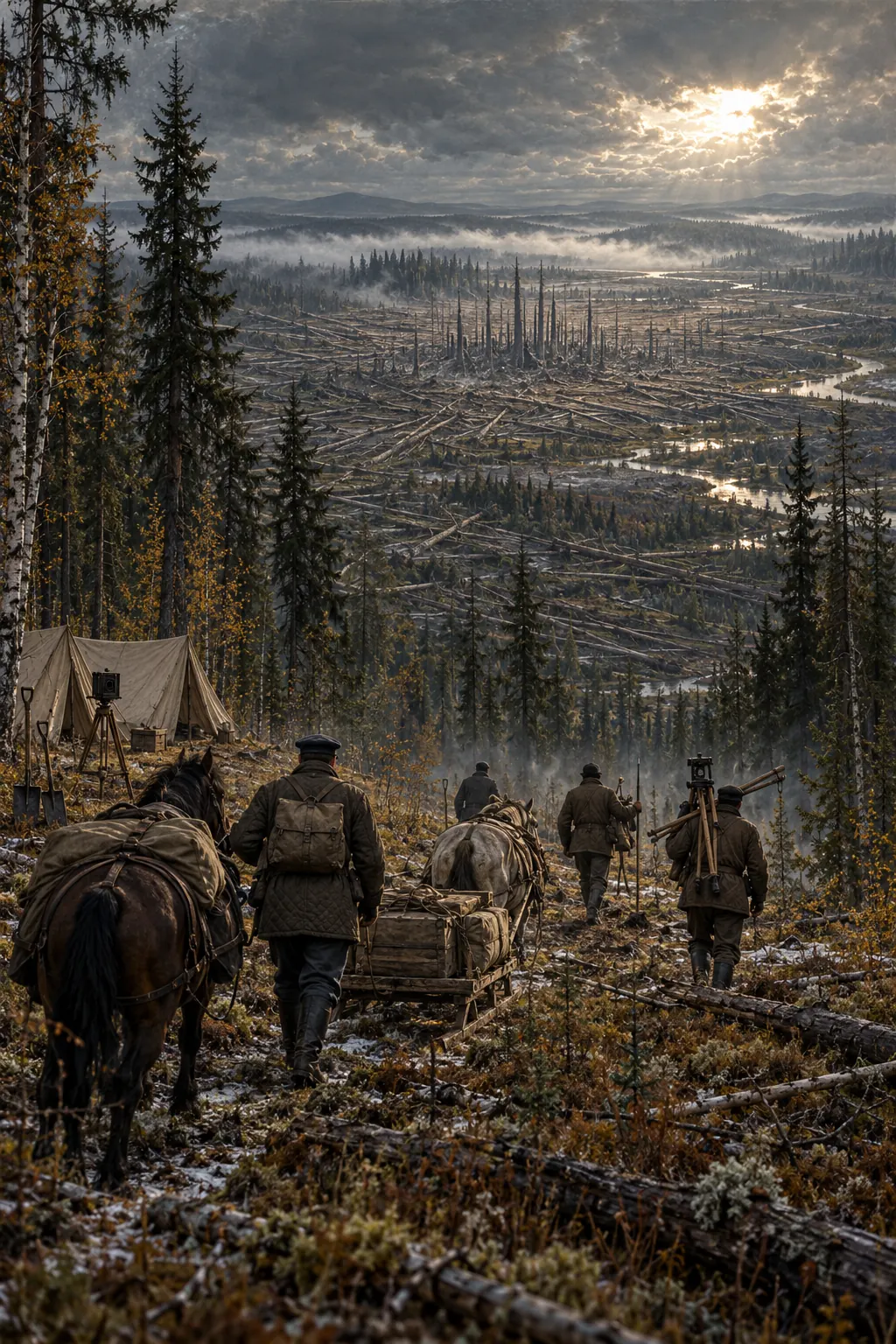
Very few people lived there, and for a long time no one went to look. Then, in 1927, one man walked into that forest.
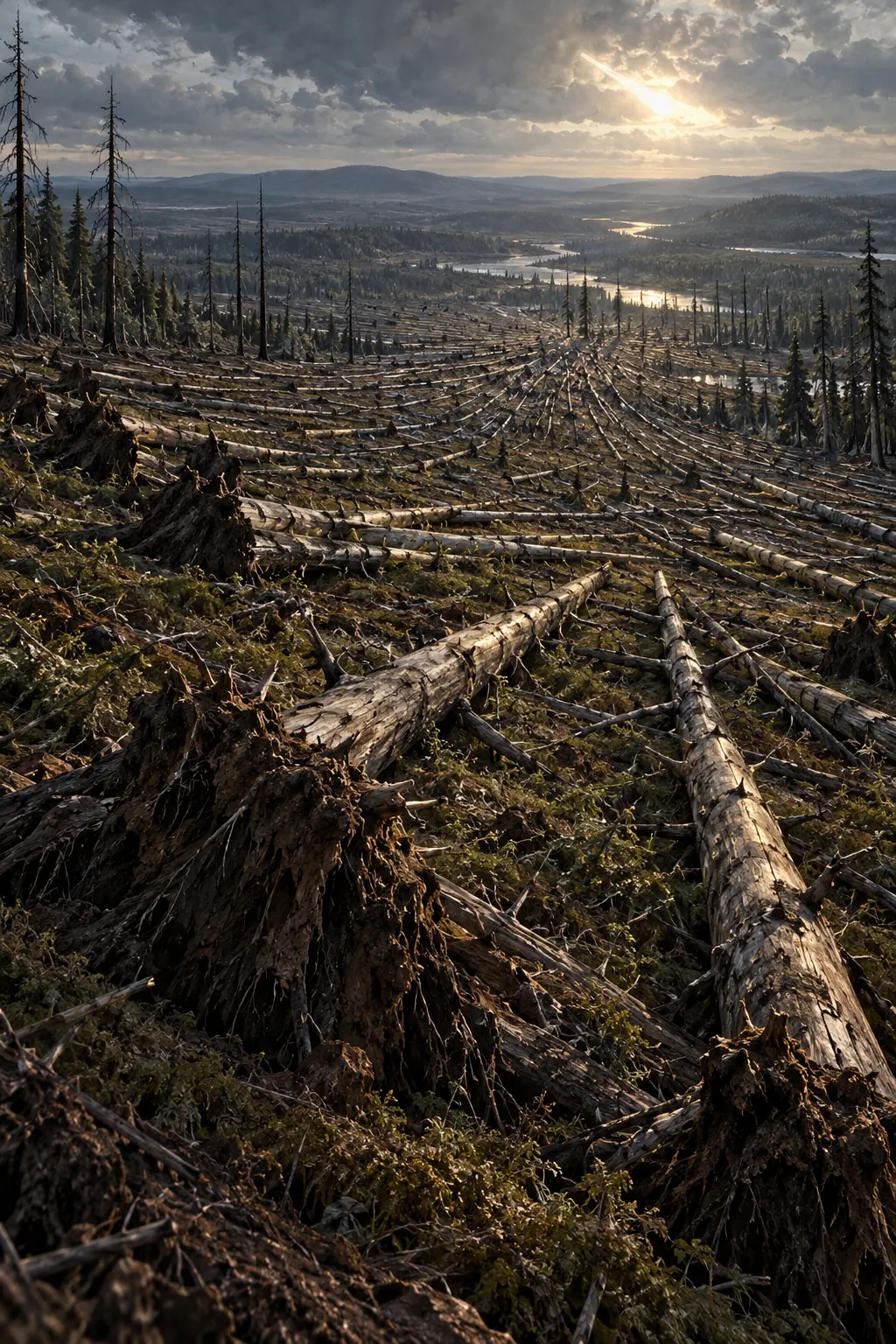
Leonid Kulik was the first researcher to reach the site. What he saw was fallen trees without end. But followed back along the way they lay, they all pointed to one place.
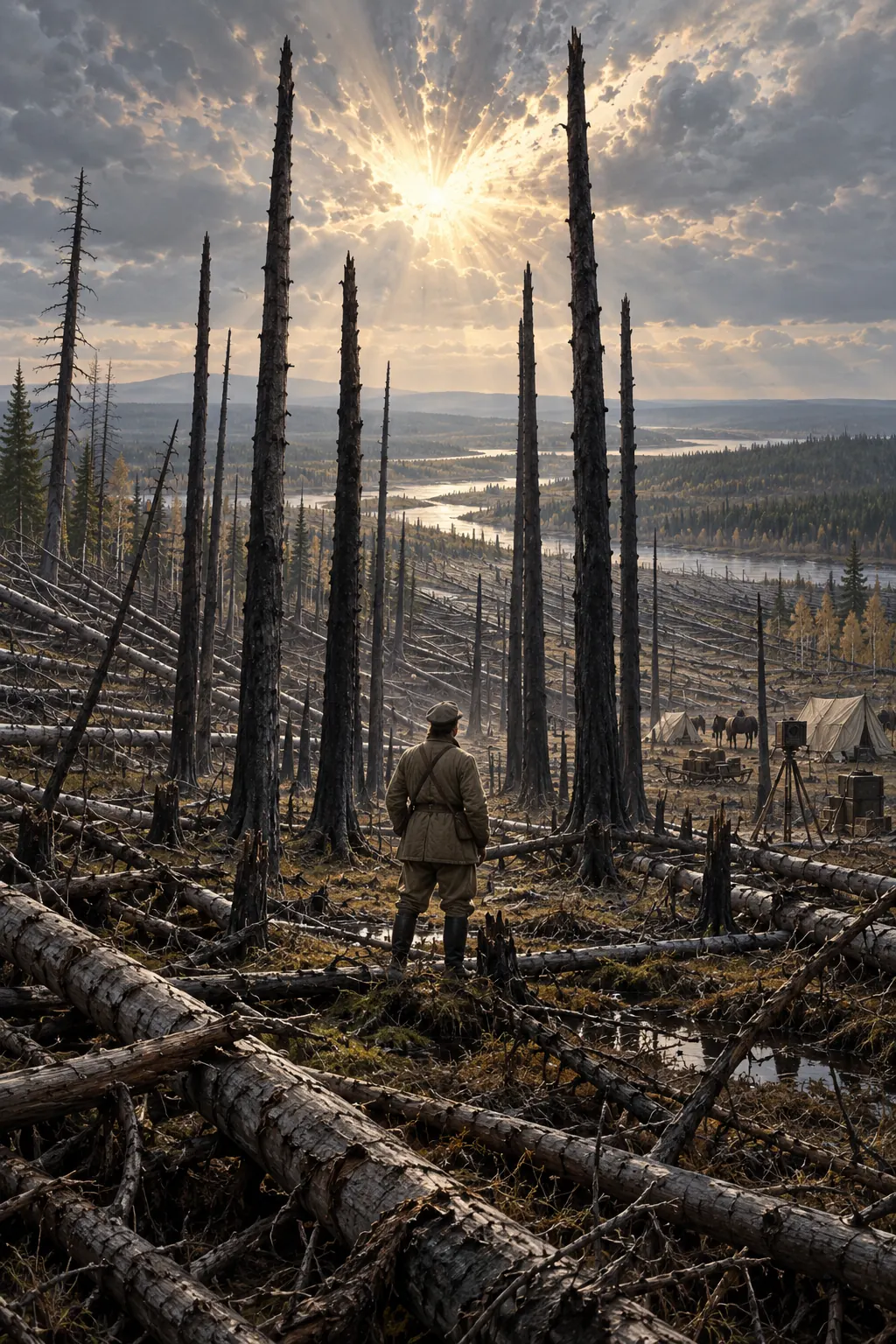
Kulik found the centre. But there, of all places, trees were still standing — not knocked down, only scorched.
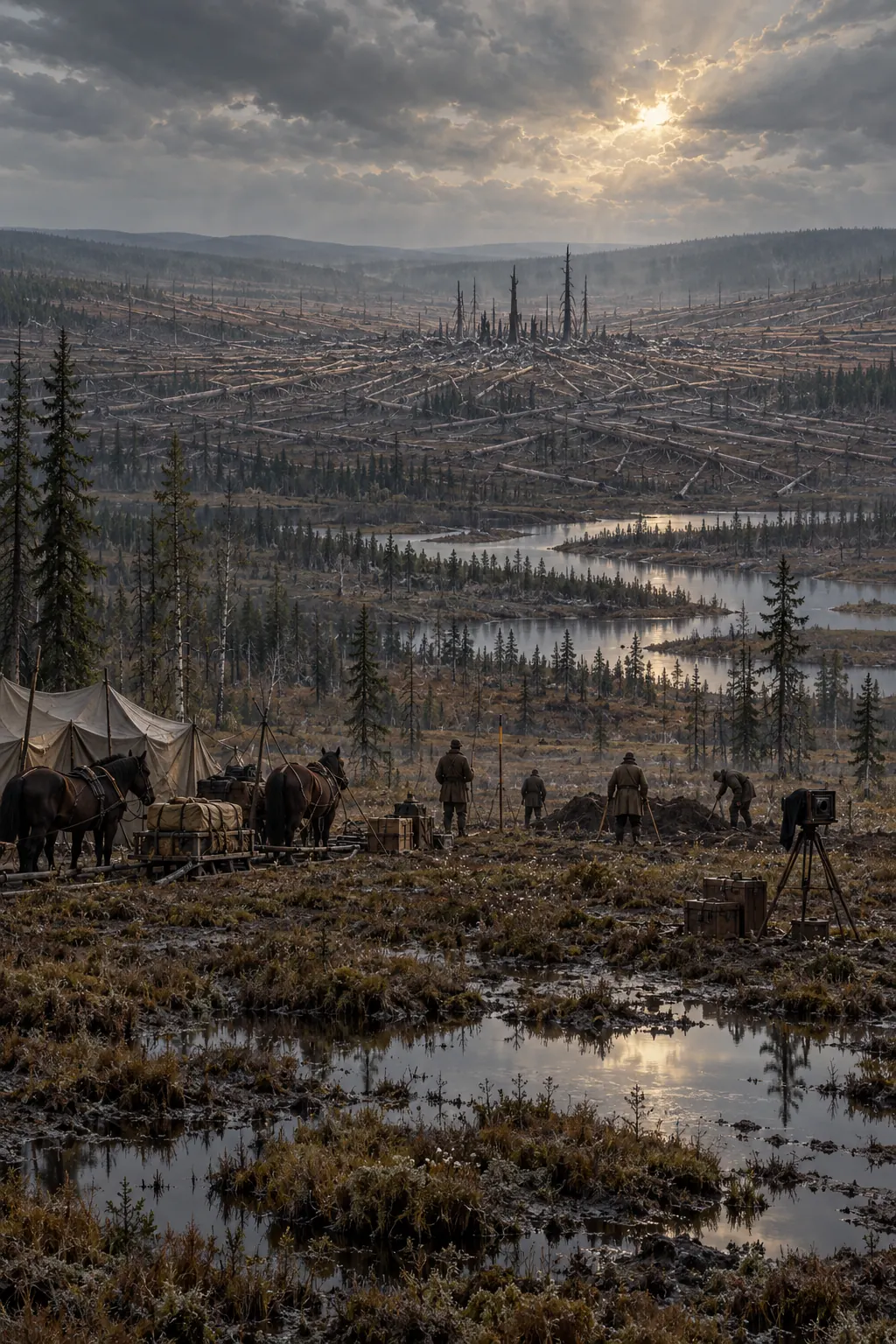
Kulik led a series of expeditions through the 1920s and 30s. No fragment of the falling object and no impact crater ever turned up. The answer was not in the ground but in the sky.

The most likely answer today: an object from space exploded before reaching the ground, roughly 5 to 10 kilometres up, with the energy of more than ten million tons of TNT. So instead of a crater, it left a flattened forest.
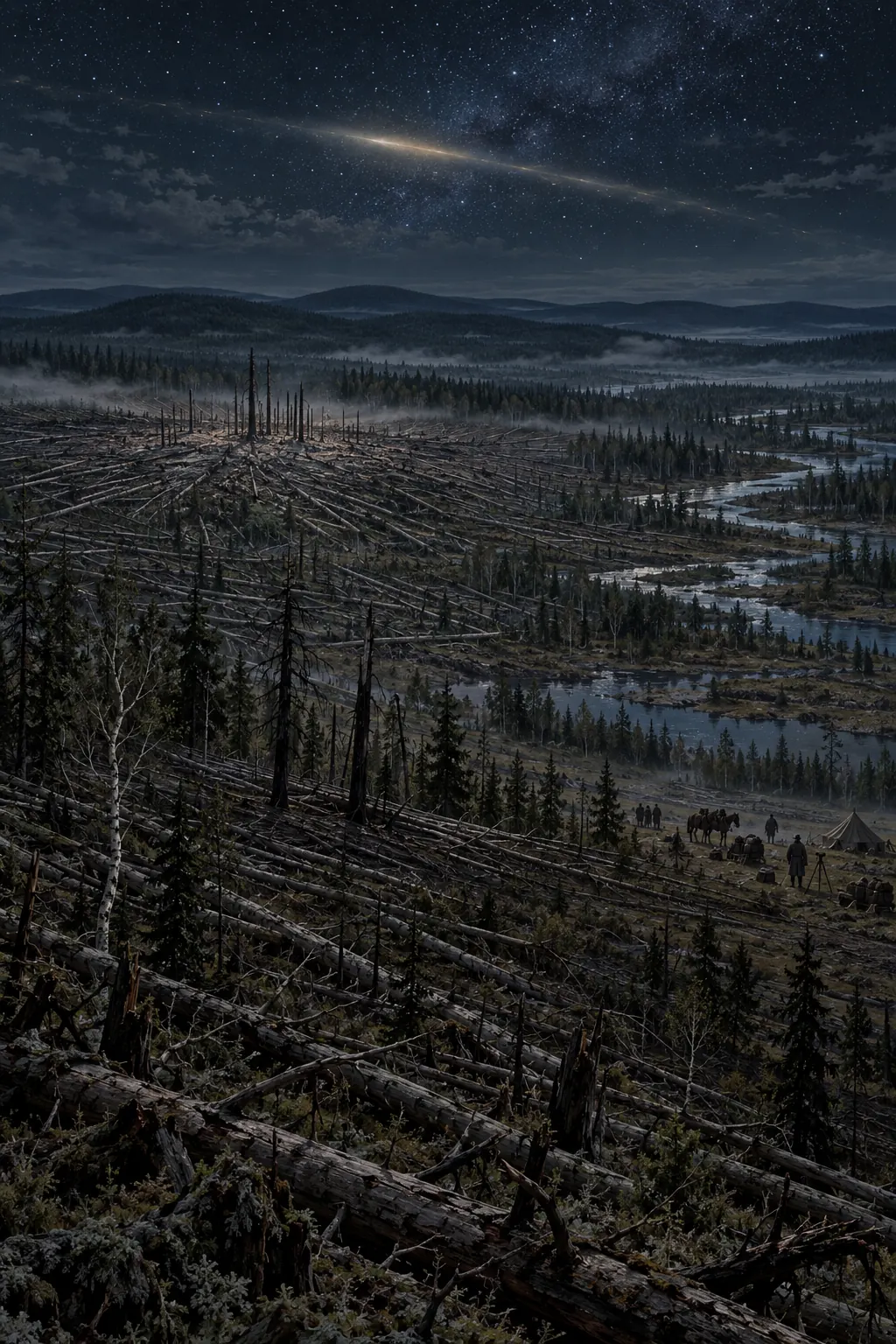
What the object was is still argued over — a comet, or a stony asteroid. Not a single fragment has been found.

For Lake Cheko, a small lake about 8 kilometres north-north-west of the centre, there are published papers arguing that a fragment made it, and papers arguing that it did not.
What the records say
A NASA workshop report records that on 30 June 1908 something exploded over the forest near the Podkamennaya Tunguska river in central Siberia, and that no fragment of the object and no impact crater were ever found. Boslough and Bruno write in Scientific Reports that Leonid Kulik was the first researcher to reach the site, in 1927, and Gasperini reports in Rendiconti Lincei that Kulik traced the fallen trees back to a single centre where trees still stood, stripped and scorched.
Gasperini puts the likely airburst at 5 to 10 kilometres up with an energy of 10 to 15 megatons; the NASA workshop gives about 10 kilometres and 10 to 20 megatons. Gasperini notes that whether the object was a comet or an asteroid is still debated, and that researchers disagree on whether nearby Lake Cheko was made by a fragment.
Sources
- D. Morrison, "Tunguska Workshop: Applying Modern Tools to Understand the 1908 Tunguska Impact", NASA/TM-220174 (2018) — NASA Ames Research Center ntrs.nasa.gov
- L. Gasperini, "Lake Cheko and the 1908 Tunguska Event", Rendiconti Lincei (2015) — Springer link.springer.com
- M. Boslough and A. Bruno, "Fact-checking widely cited claims about the Tunguska airburst", Scientific Reports (2025) — PubMed Central pmc.ncbi.nlm.nih.gov
More stories
A plot to blow up Parliament in 1605 was given away by one anonymous letter
In 1605 plotters hid 36 barrels of gunpowder under the House of Lords. An unsigned letter to Lord Monteagle reached the king, and the cellar was searched.
In 1377 a port city made ships wait thirty days, and later the wait became forty
In 1377 Ragusa, now Dubrovnik, made ships from plague areas wait thirty days outside the city. The wait later grew to forty, which gave us the word quarantine.

The first man across the line in the 1904 Olympic marathon had ridden in a car
At the 1904 St. Louis Olympics, Fred Lorz crossed the marathon line first after riding part of the way in a car. The winner was given strychnine.
Get the week in history
One email a week: the new articles, and what was happening elsewhere at the same moment. Free, no ads, unsubscribe any time. How we handle your email.
Text licensed CC BY-NC-ND 4.0. Found an error? Tell us.