The first man across the line in the 1904 Olympic marathon had ridden in a car
At the 1904 St. Louis Olympics, Fred Lorz crossed the marathon line first after riding part of the way in a car. The winner was given strychnine.
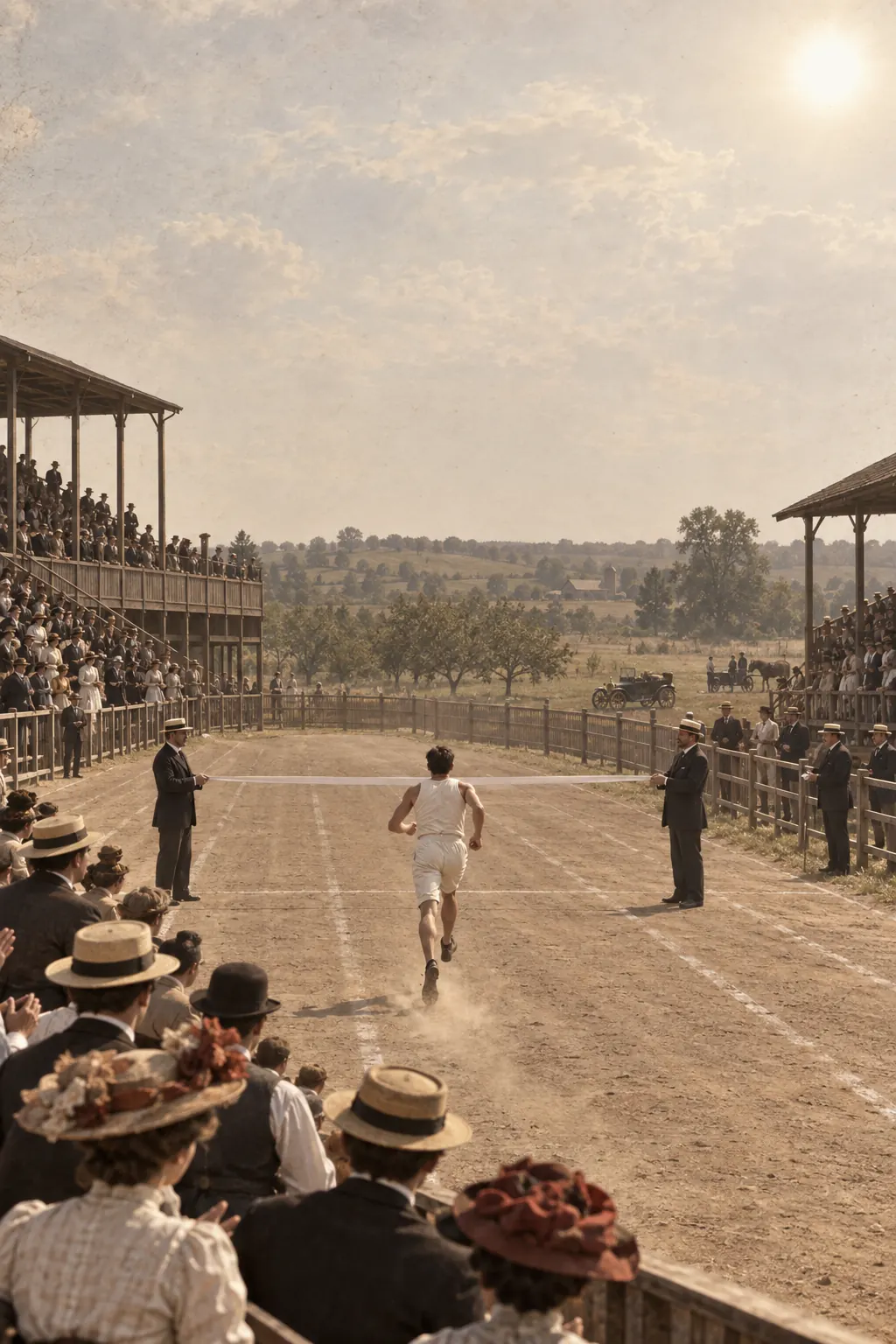
Why the first man across the Olympic marathon finish line was disqualified.

30 August 1904, St. Louis. The Olympic marathon, held alongside the World's Fair, started at about 3 p.m. It was around 32°C, and the roads were thick with dust. Thirty-two runners lined up.

On top of that, there was only one place on the whole course to get water. The chief organiser wanted to see what happened to runners who drank less. One by one, men began to stop.
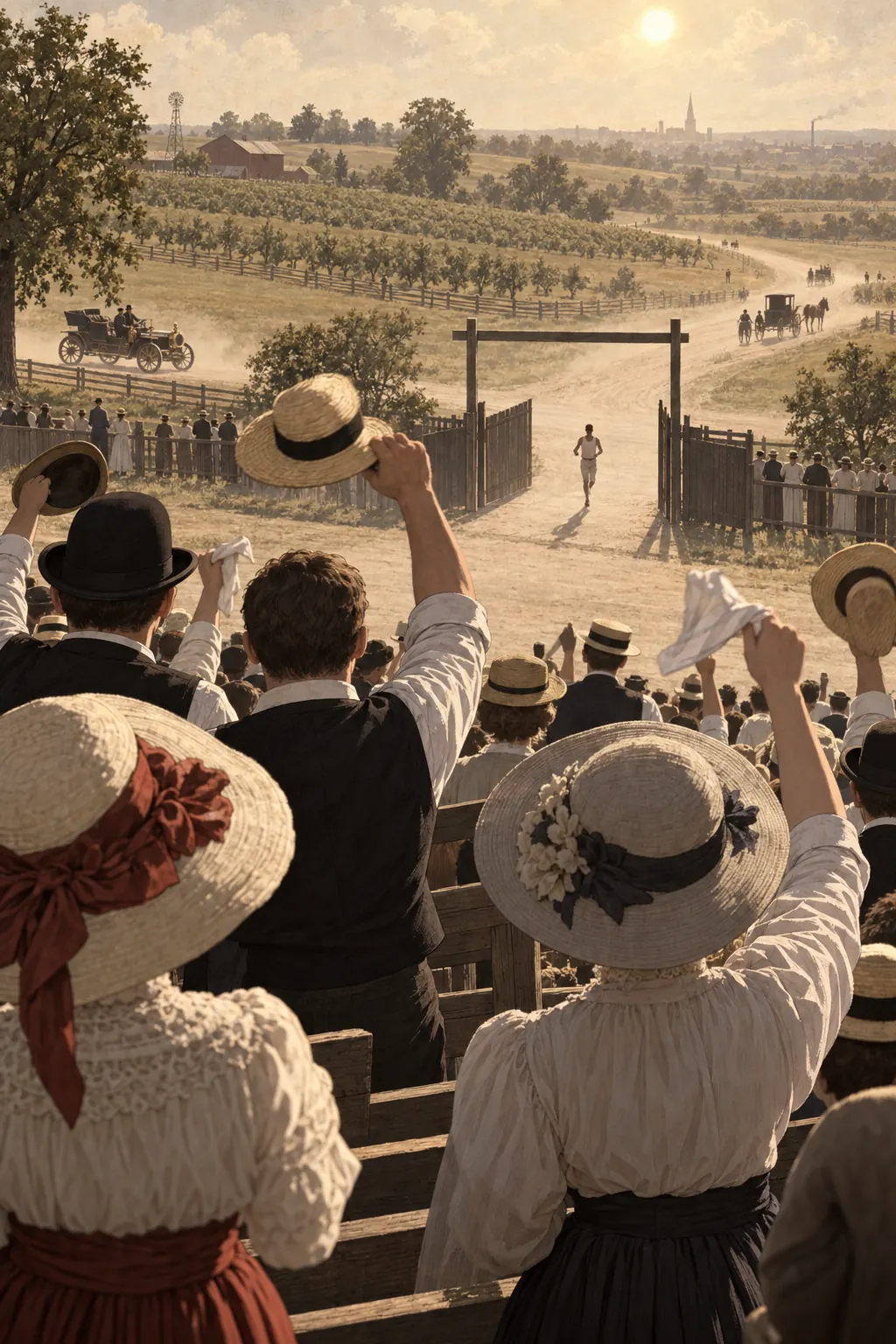
Hours later, the first man into the stadium was the American Fred Lorz. The crowd roared. But he was a runner who had stopped partway. Around fifteen kilometres in, he had been hit by cramp.

With cramp in his legs, Lorz climbed into one of the cars following the race. He rode a long way in it. As the finish drew near, he got out and started running again.

He was found out quickly, and the cheers turned to boos. The Olympic Museum calls it his "bad joke"; he later denied meaning to deceive anyone. He was disqualified and banned for life, though the ban was lifted within months. The real winner's story was stranger still.

The real winner was the American Thomas Hicks. As he faded, his handlers gave him egg mixed with strychnine, and brandy. Strychnine is a poison. There was no rule against it then; today it would mean disqualification for doping.
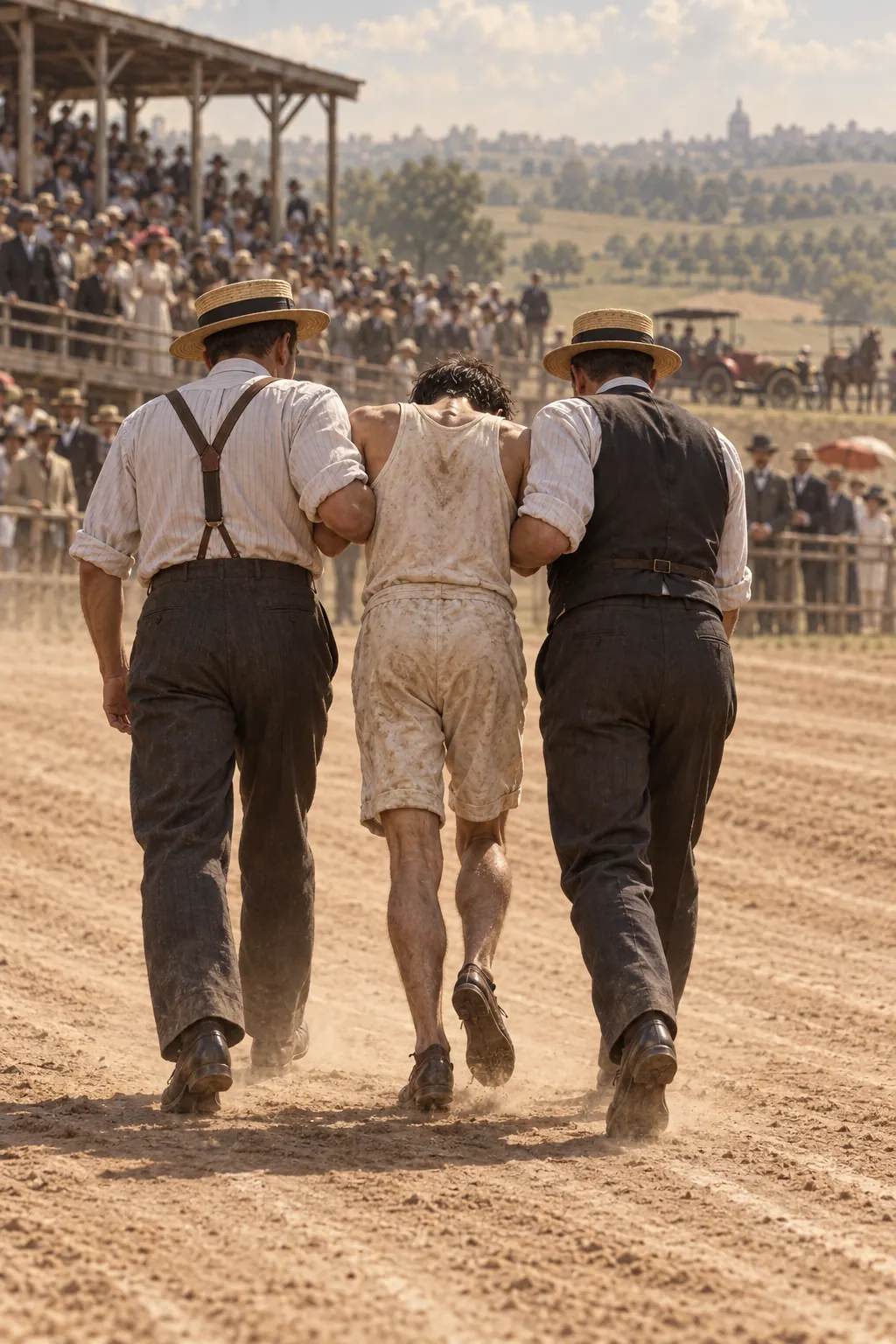
By the end Hicks could barely walk. He crossed the line held up on both sides, and it took four doctors before he was fit to leave the grounds.

The win stood as Hicks's. And Lorz, the man who had taken the car, won the Boston Marathon the following year, 1905 — this time on his own legs from start to finish.
What the records say
The Olympic Museum records that Frederick Lorz got cramp after 15 kilometres and rode in one of the accompanying cars to within 10 kilometres of the finish, then ran into the stadium first; the museum titles the episode his “bad joke.” The St. Louis County Library’s guide records that the organiser James Sullivan set up only one water station on the course, that Lorz was banned for life by the AAU and the ban was lifted months later, and that Lorz won the Boston Marathon in 1905.
The Olympic Museum records that the winner, Thomas Hicks, was given strychnine with egg whites during the race and a second dose with cognac, that today this would have led to disqualification for doping, and that he needed four doctors before he was well enough to leave the field.
Sources
- "Thomas HICKS" — The Olympic Museum (IOC), via Google Arts & Culture artsandculture.google.com
- "Frederick LORZ" — The Olympic Museum (IOC), via Google Arts & Culture artsandculture.google.com
- "Marathon - 1904 St. Louis Olympics" — St. Louis County Library research guide slcl.libguides.com
More stories

A plot to blow up Parliament in 1605 was given away by one anonymous letter
In 1605 plotters hid 36 barrels of gunpowder under the House of Lords. An unsigned letter to Lord Monteagle reached the king, and the cellar was searched.

In 1908 something flattened a Siberian forest and left no crater
On 30 June 1908 an explosion over central Siberia flattened the forest near the Podkamennaya Tunguska river. No crater and no fragment were ever found.

In 1377 a port city made ships wait thirty days, and later the wait became forty
In 1377 Ragusa, now Dubrovnik, made ships from plague areas wait thirty days outside the city. The wait later grew to forty, which gave us the word quarantine.
Get the week in history
One email a week: the new articles, and what was happening elsewhere at the same moment. Free, no ads, unsubscribe any time. How we handle your email.
Text licensed CC BY-NC-ND 4.0. Found an error? Tell us.