The river stank so badly that Parliament passed a sewer law in eighteen days
In the hot summer of 1858 the Thames stank outside the Houses of Parliament. A bill to borrow £3 million for new sewers became law eighteen days later.
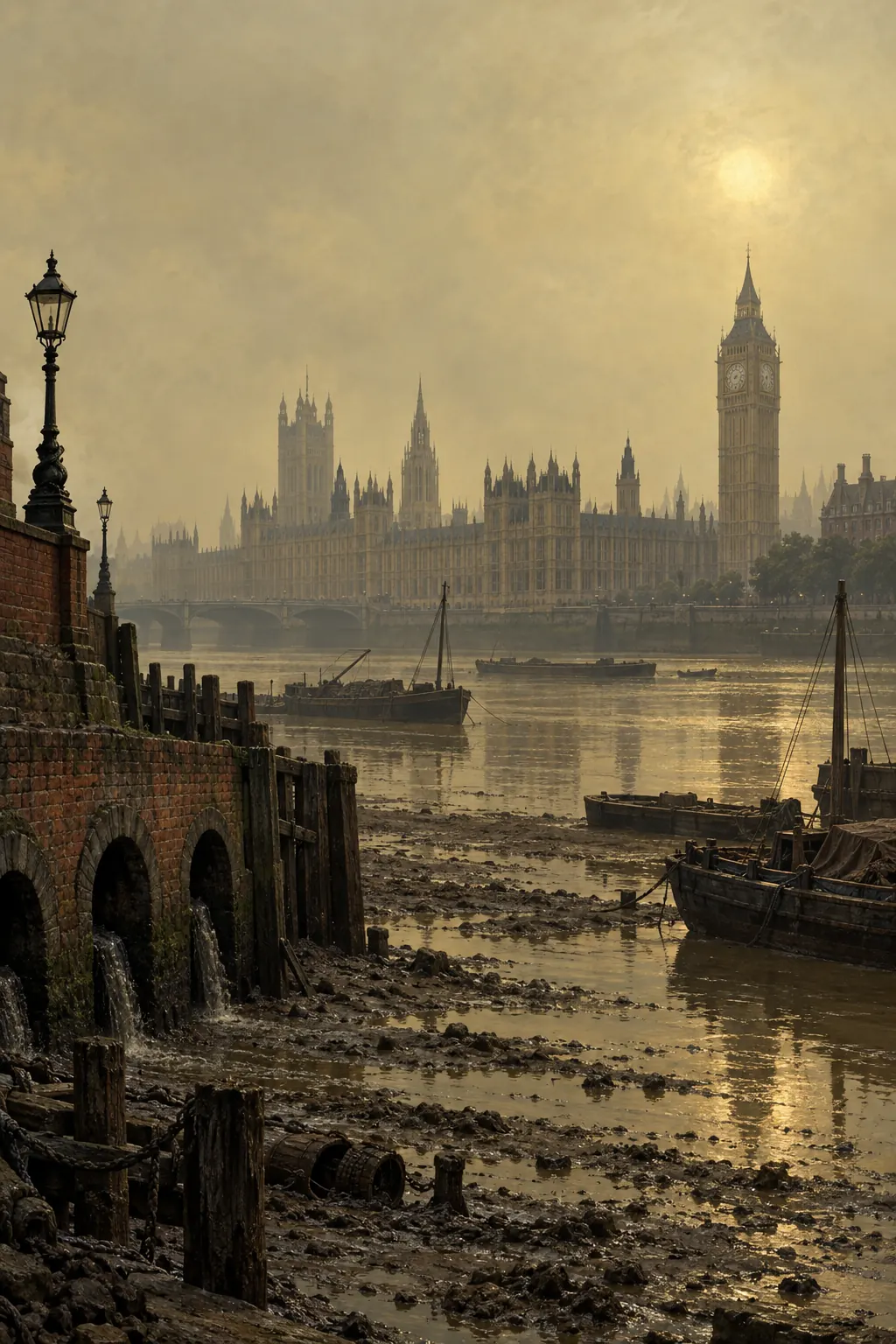
Why Britain's Parliament passed a sewer bill in 18 days.
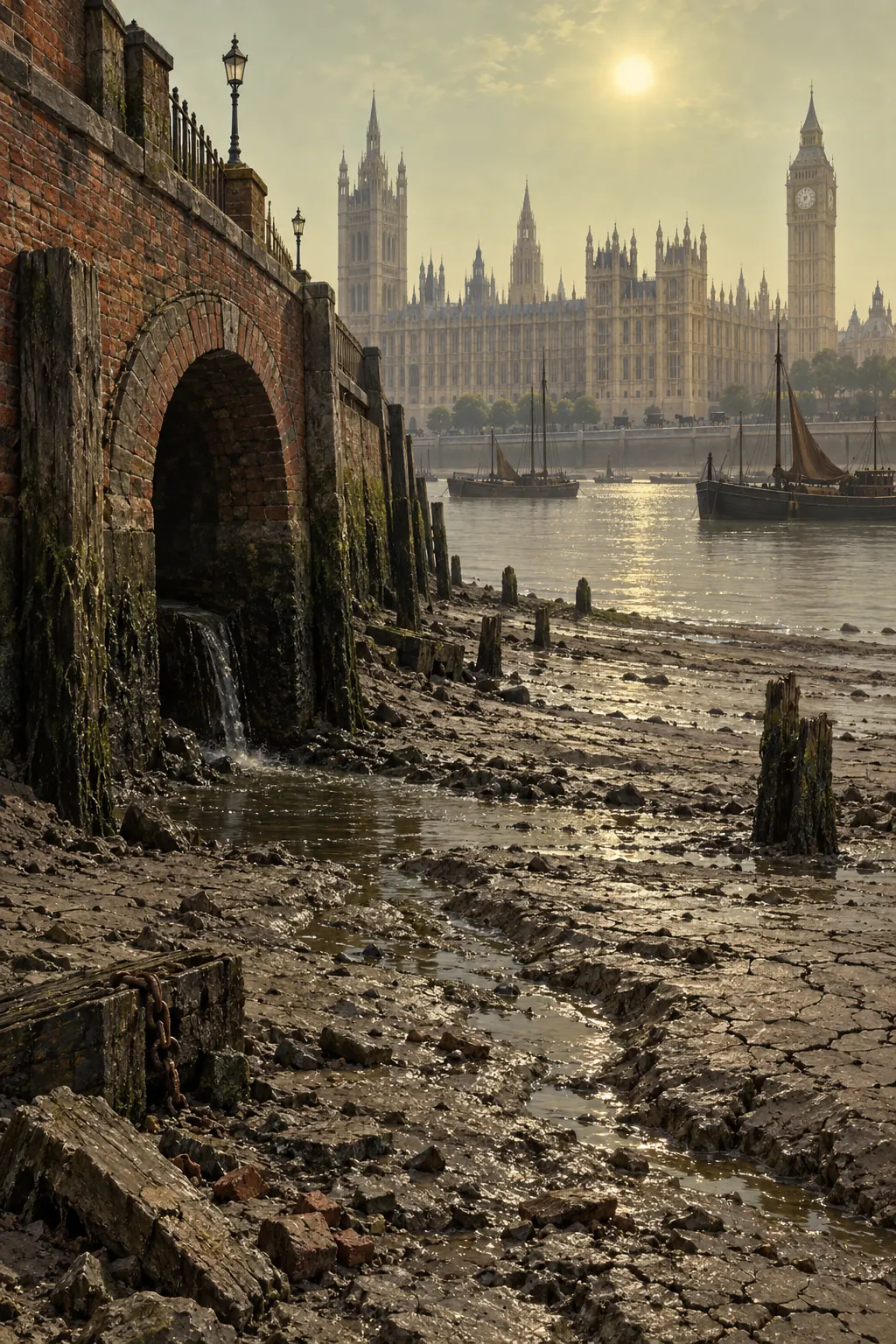
In the summer of 1858 the Thames ran low, and the filth on its bed lay exposed and baking in the sun. London's sewage flowed straight into the river. And on its bank stood the Houses of Parliament.
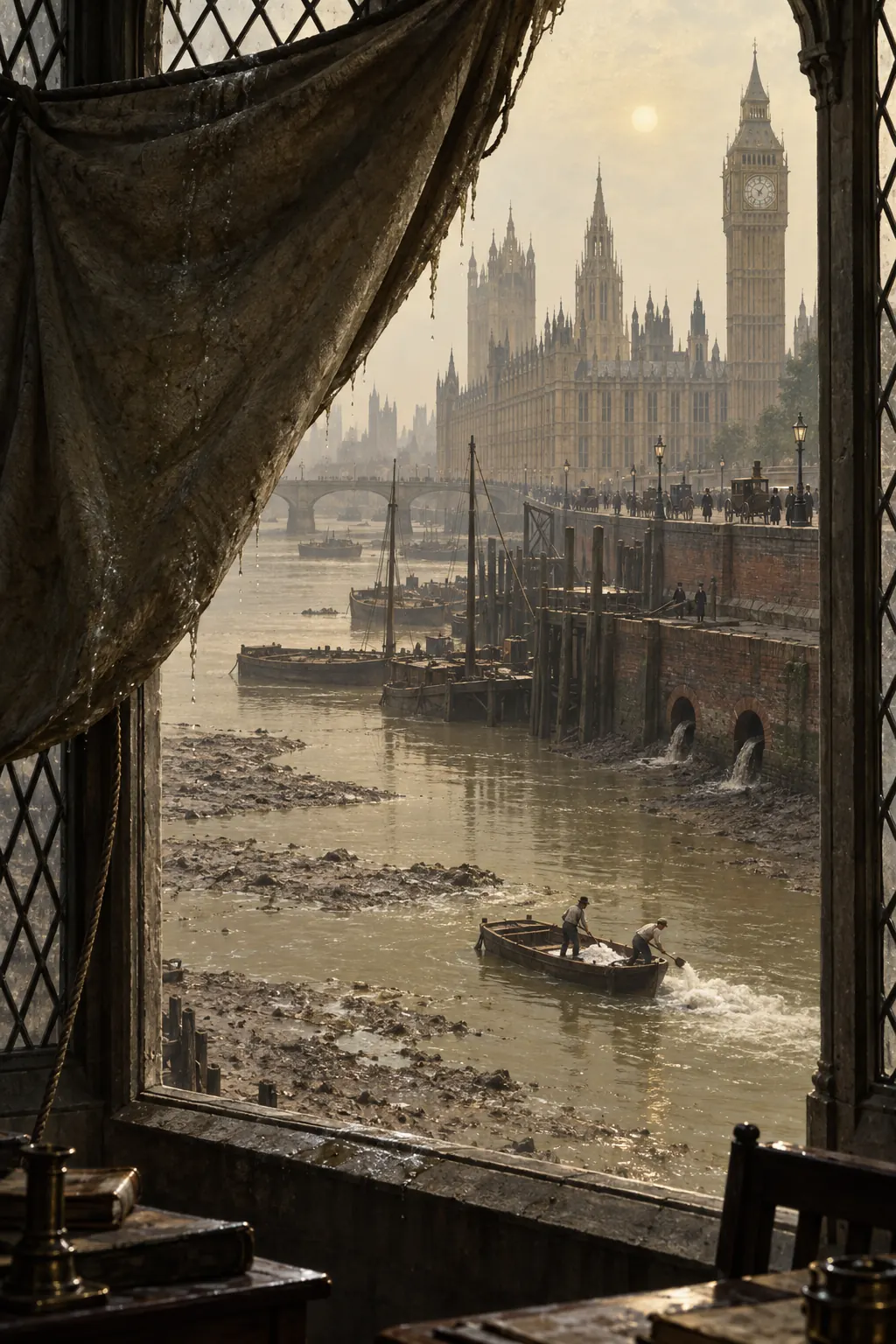
Parliament hung cloth soaked in chloride of lime over every window facing the river, and boats spread lime on the water. It did almost nothing. The smell came into the chamber.
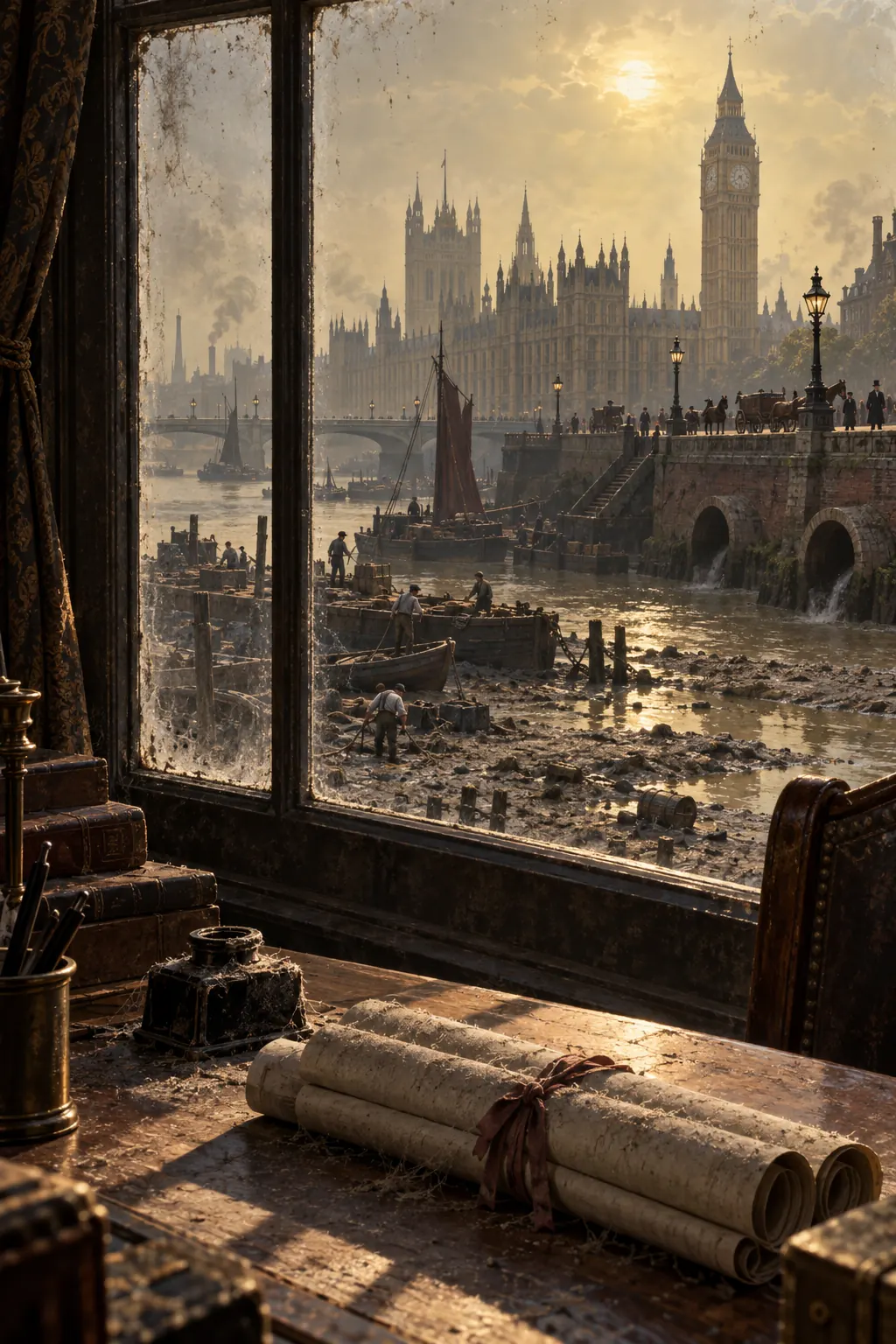
In fact a body to fix London's drains already existed. For years it had not started work, because it did not have the money. That summer the problem arrived under the MPs' own noses.
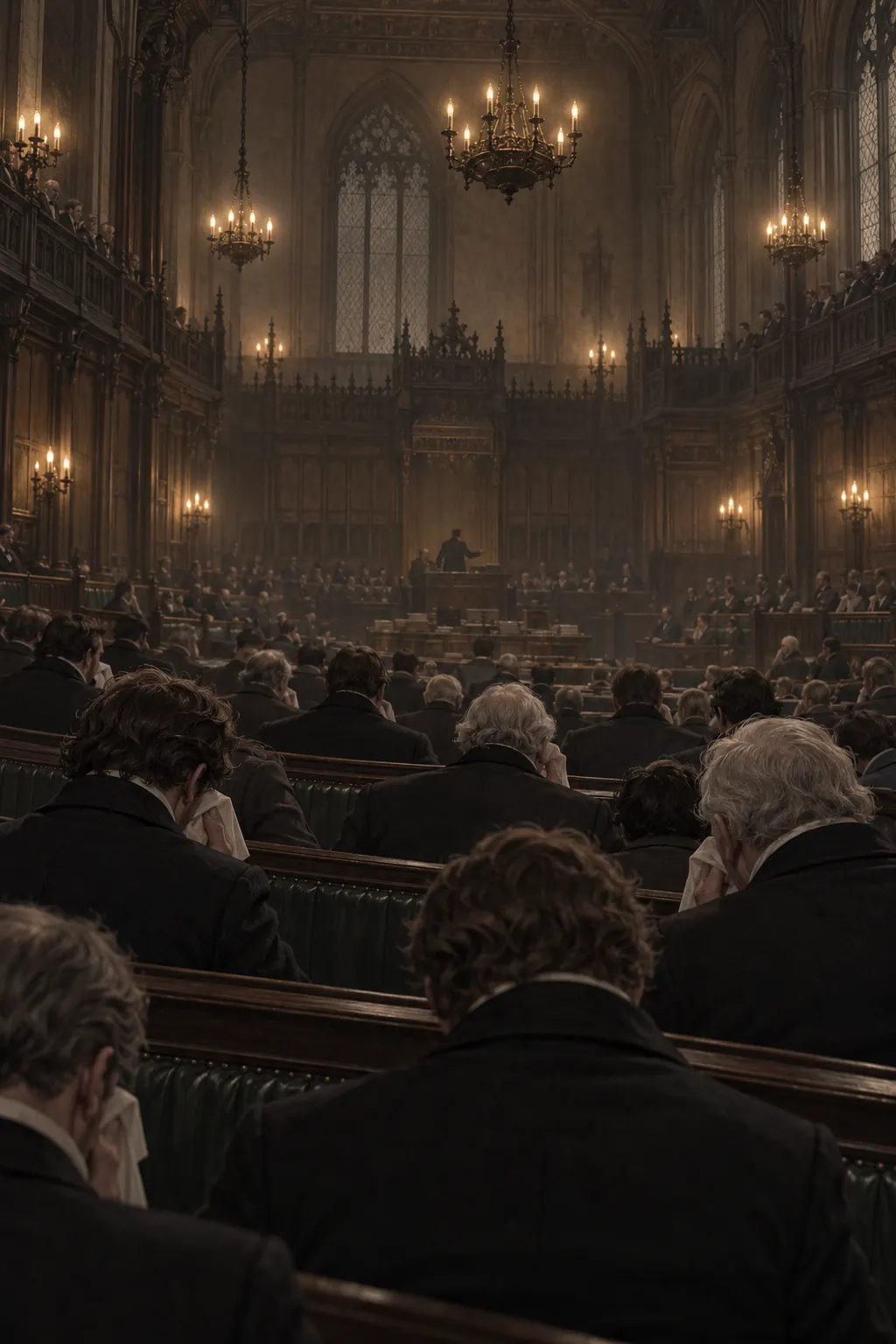
On 15 July the Chancellor of the Exchequer, Benjamin Disraeli, brought in a bill. According to the parliamentary record, he said the Thames had become a Stygian pool, reeking with ineffable and intolerable horrors.
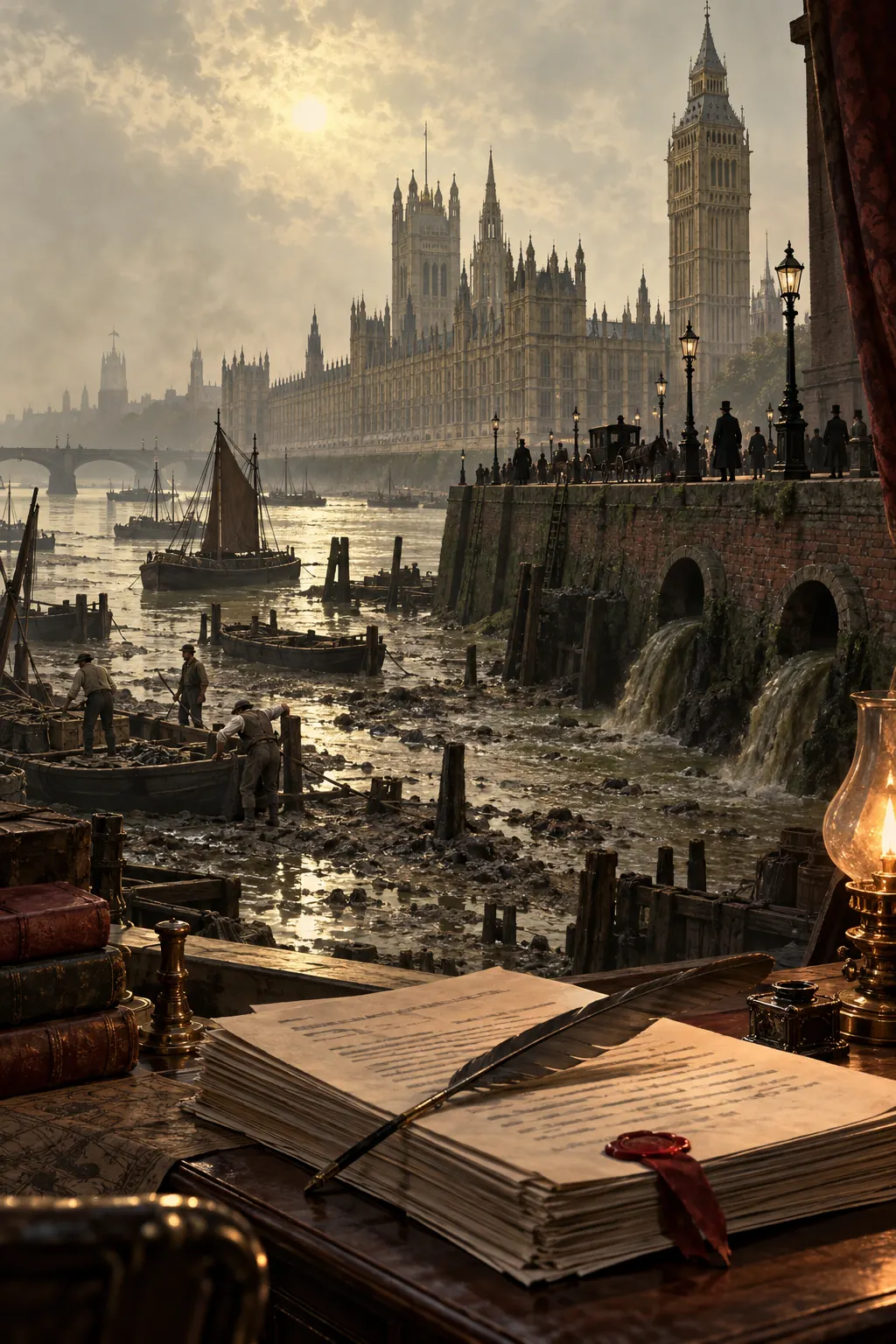
The bill let London borrow three million pounds for the sewers. It became law on 2 August, eighteen days after it was introduced. After years of going nowhere.
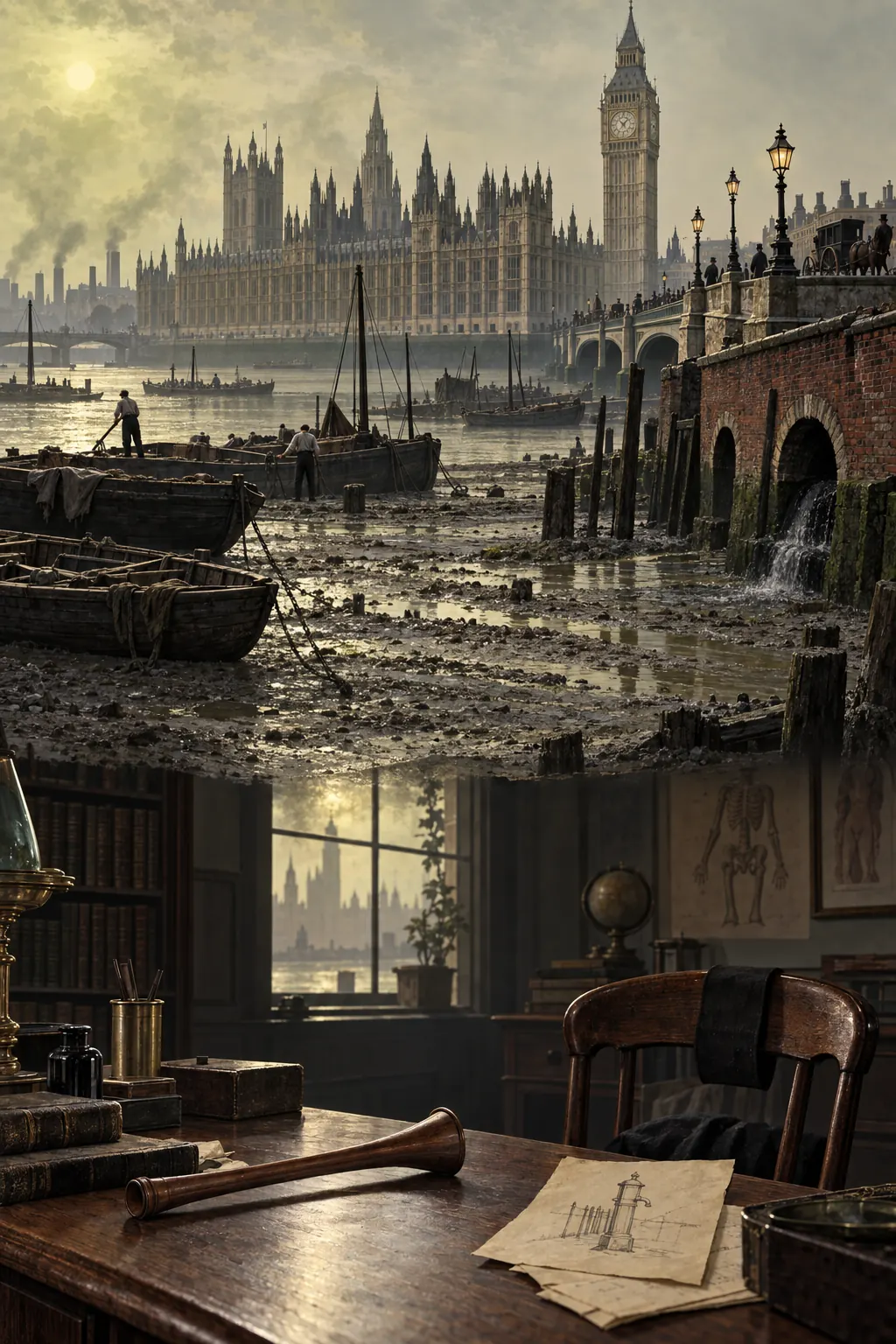
Many people then believed bad smells carried disease. The physician John Snow, who argued that cholera spread through water, died on 16 June that year with his idea still largely ignored. But the sewers dug because of a smell did something no one had planned.
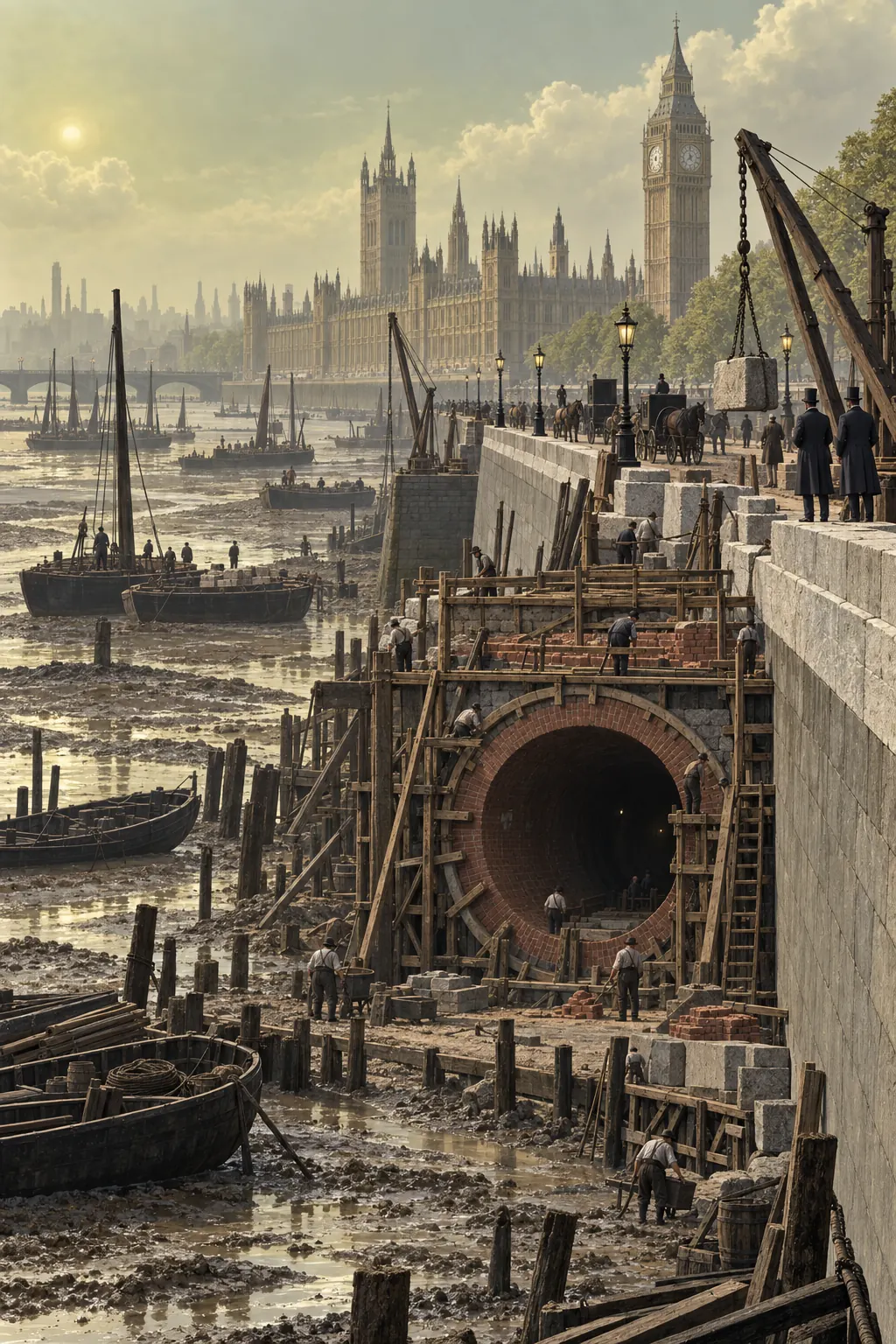
The work went to the engineer Joseph Bazalgette. He built new embankments along the river and laid sewers inside them. The Victoria Embankment on the Thames was finished in 1870.
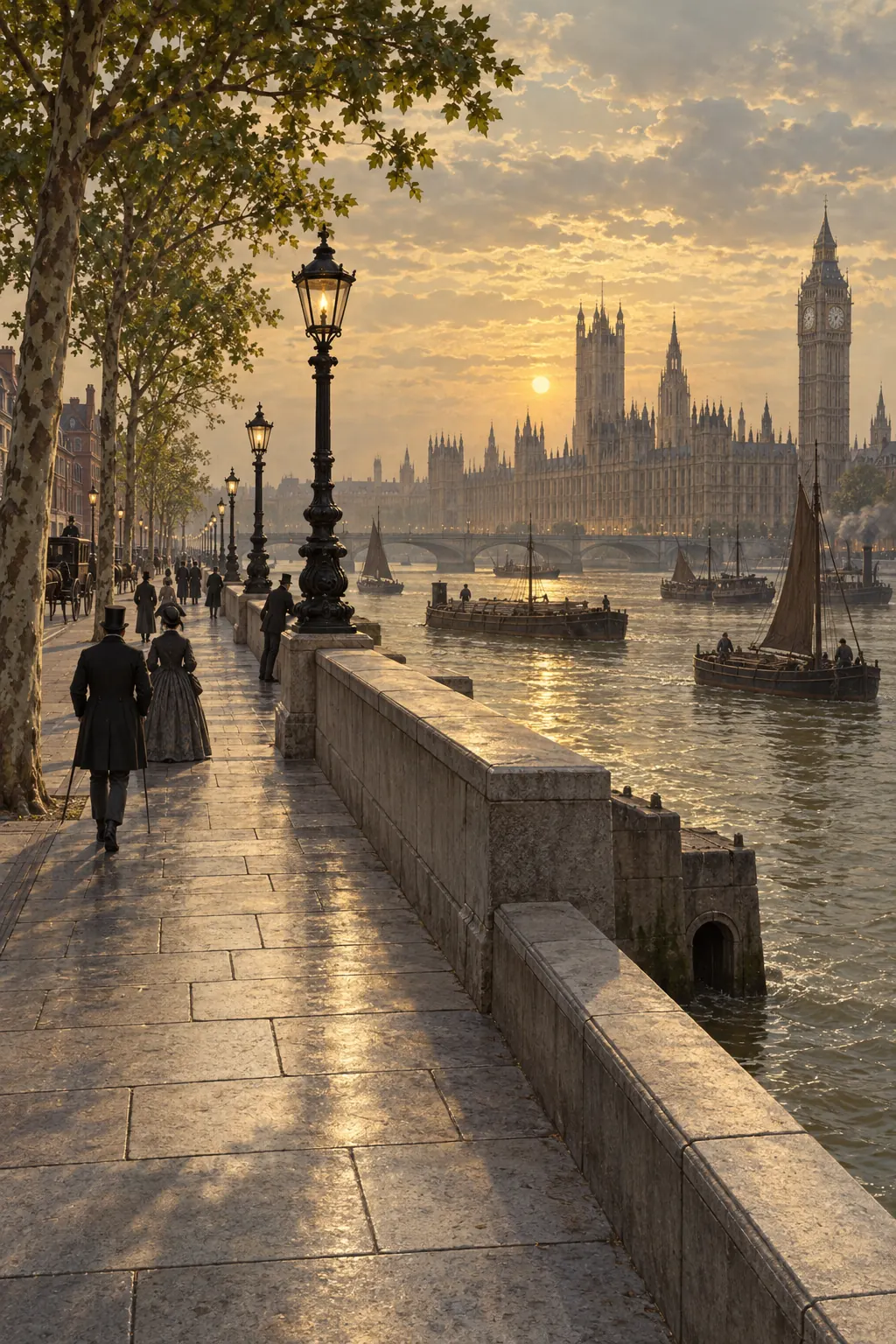
By the time the network was completed in the mid-1870s, cholera had all but disappeared from London. Snow had been right: the problem was the water, not the smell. London still relies on those sewers today.
What the records say
In the summer of 1858 London’s sewage flowed into a low Thames, and the stench reached the Houses of Parliament, which hung lime-soaked cloth over its windows with little effect; Parliament’s own record calls the smell “overpowering.” On 15 July 1858 Chancellor of the Exchequer Benjamin Disraeli told the Commons the Thames had become “a Stygian pool, reeking with ineffable and intolerable horrors” and asked for leave to bring in a bill letting London borrow £3,000,000 for new sewers, a figure he stated himself in that debate. The bill became law on 2 August 1858, eighteen days after it was introduced, ending years in which the existing Metropolitan Board of Works had lacked the money to act. Engineer Joseph Bazalgette built the project, including the Victoria Embankment, completed in 1870; the physician John Snow, who had argued that cholera spread through water rather than through smell, died on 16 June 1858. By the mid-1870s, once the full sewer network was finished, cholera had virtually disappeared from London.
Sources
- House of Commons, 18 June 1858, "State of the Thames — Question" — UK Parliament, Historic Hansard api.parliament.uk
- House of Commons, 15 July 1858, "First Reading" (Disraeli's statement) — UK Parliament, Historic Hansard api.parliament.uk
- "The Story of London's Sewer System" (2019) — Historic England, Heritage Calling heritagecalling.com
- "The Great Stink of 1858" — London Museum www.londonmuseum.org.uk
- "How Bazalgette built London's first super-sewer" — London Museum www.londonmuseum.org.uk
- "John Snow: Cholera & the Broad Street pump" — London Museum www.londonmuseum.org.uk
- Walford, Old and New London, vol. 3, "The Victoria Embankment" — British History Online www.british-history.ac.uk
More stories
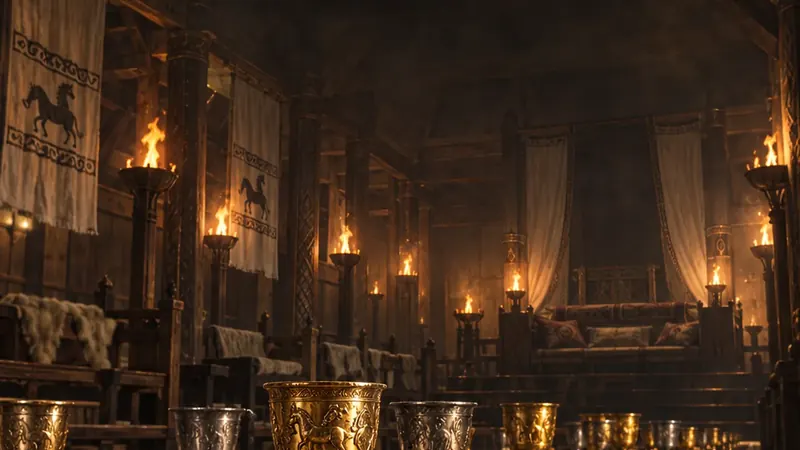
Gold for his guests, wood for himself: the feast where Attila wanted to be seen
In 448 or 449 a Roman envoy watched Attila eat from a wooden plate while his guests drank from gold, on an embassy carrying a secret plot to kill him.

Starving in a besieged city, they guarded a room full of food and never ate it
In besieged Leningrad, staff of a plant institute guarded seeds, grain and potatoes through the winter of 1941–42. Several starved. The seeds survived.
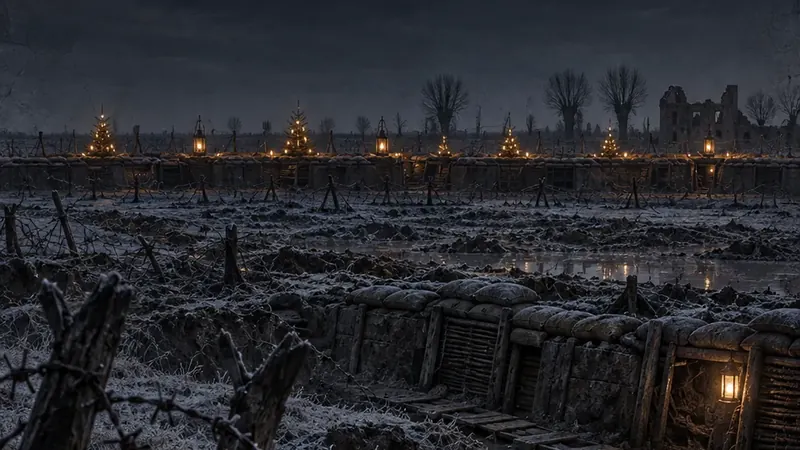
Enemies in the trenches sang to each other, then climbed out to meet: Christmas 1914
On Christmas Eve 1914 carols crossed no man's land, and next day British and German soldiers met between the trenches. No one had ordered it.
Get the week in history
One email a week: the new articles, and what was happening elsewhere at the same moment. Free, no ads, unsubscribe any time. How we handle your email.
Text licensed CC BY-NC-ND 4.0. Found an error? Tell us.