The first passengers in a balloon were a sheep, a duck and a rooster
On 19 September 1783 a balloon rose from Versailles before Louis XVI carrying a sheep, a duck and a rooster. All three came down alive.
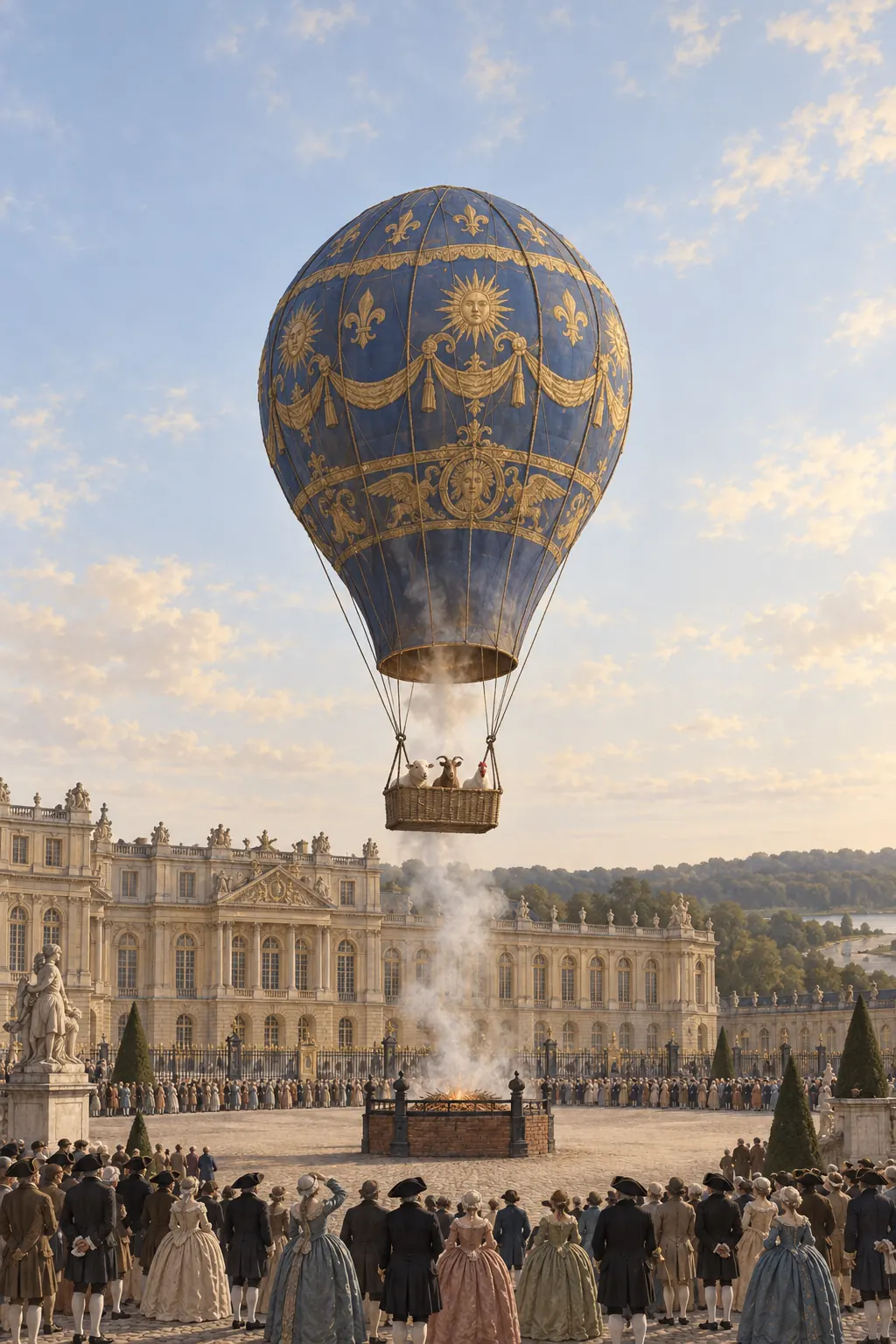
Why the first three passengers in a balloon were a sheep, a duck and a rooster.
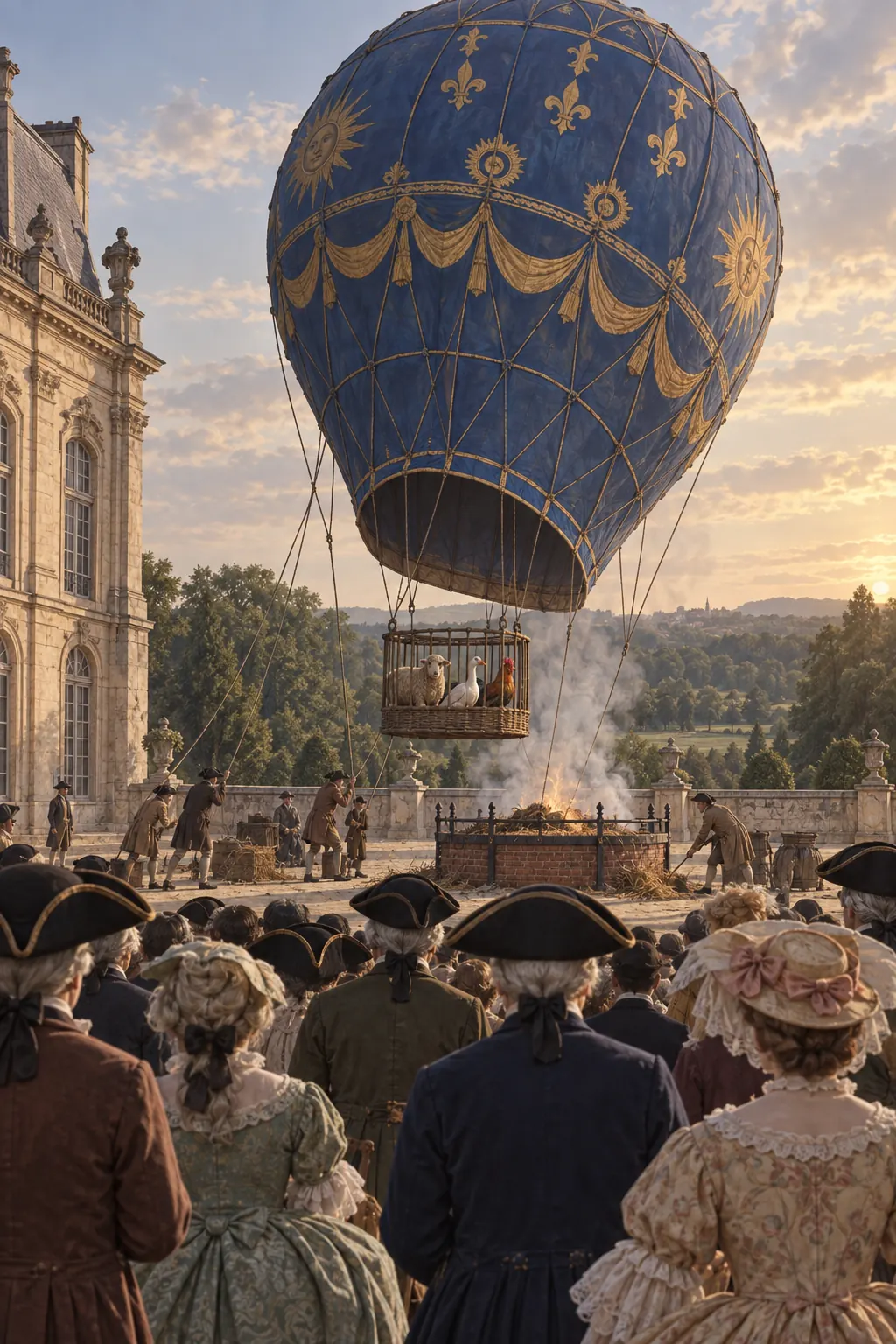
On 19 September 1783 a crowd filled the courtyard at Versailles. The king and queen were watching, and in the middle of the yard a large balloon was swelling out.
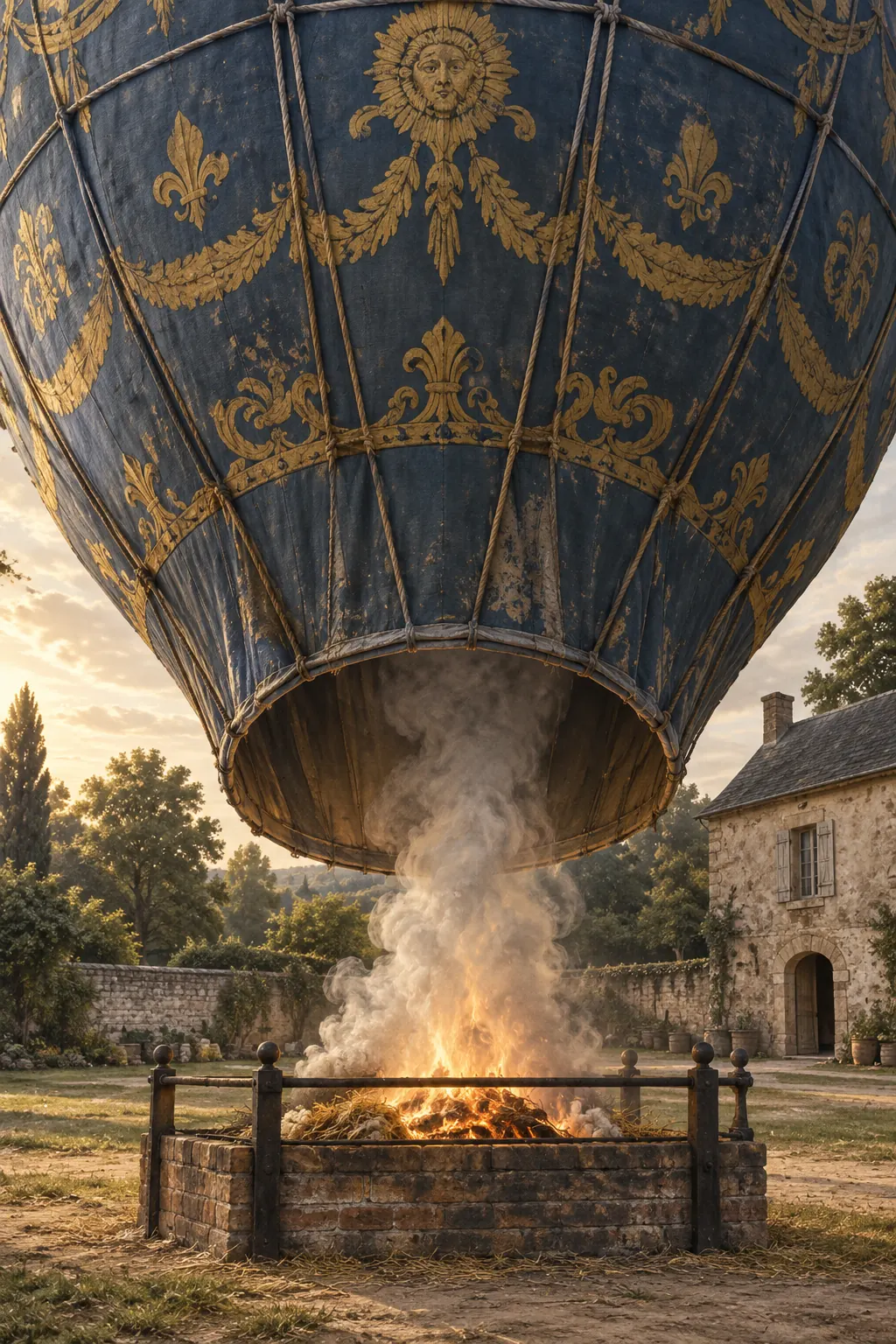
The balloon was cloth backed with paper. Below it they burned straw and pushed the hot air up inside. Until then no person had ever gone up into the sky.
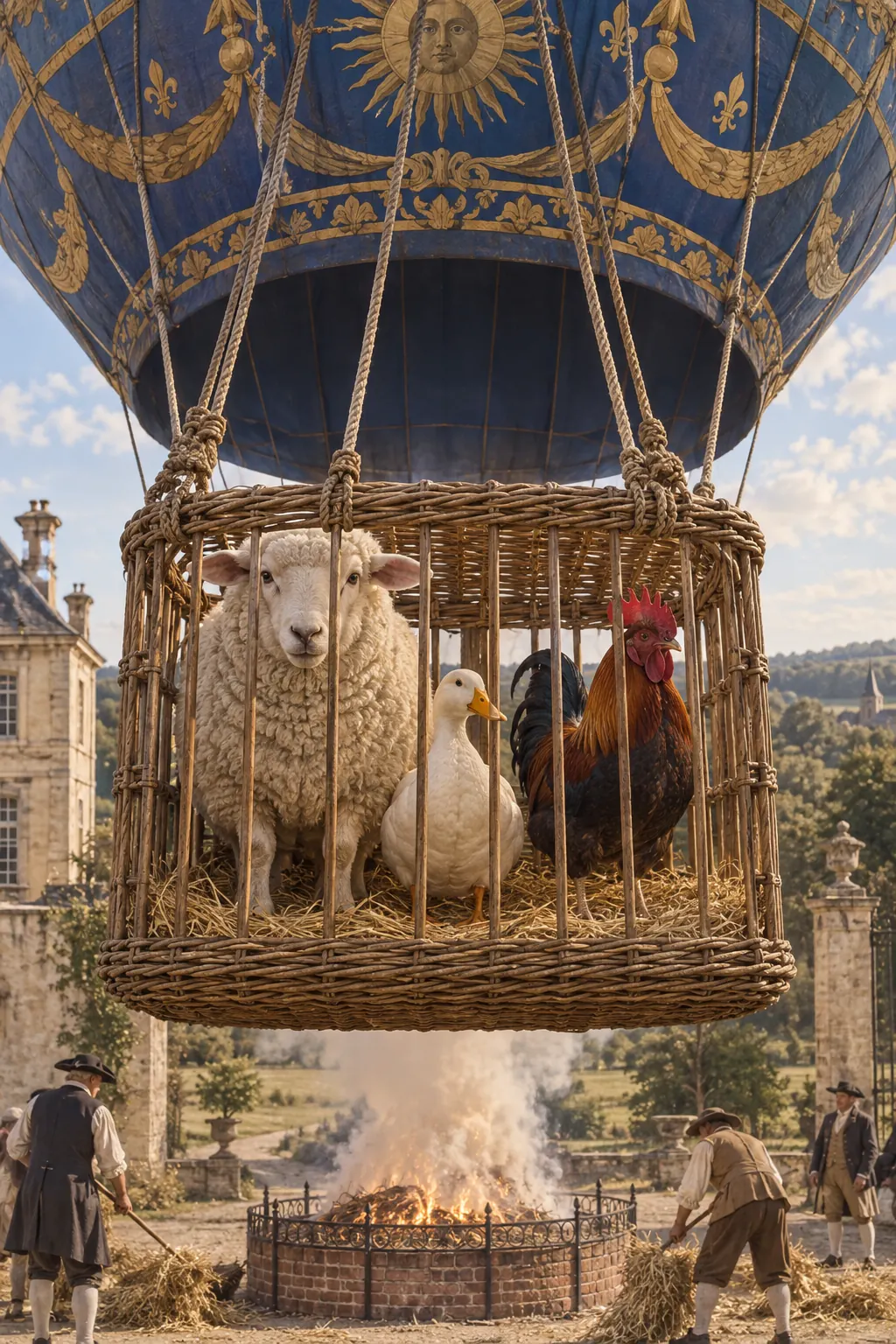
What went into the basket was not a person. It was one sheep, one duck and one rooster. It looks like a joke. For two of the three, a reason was recorded.
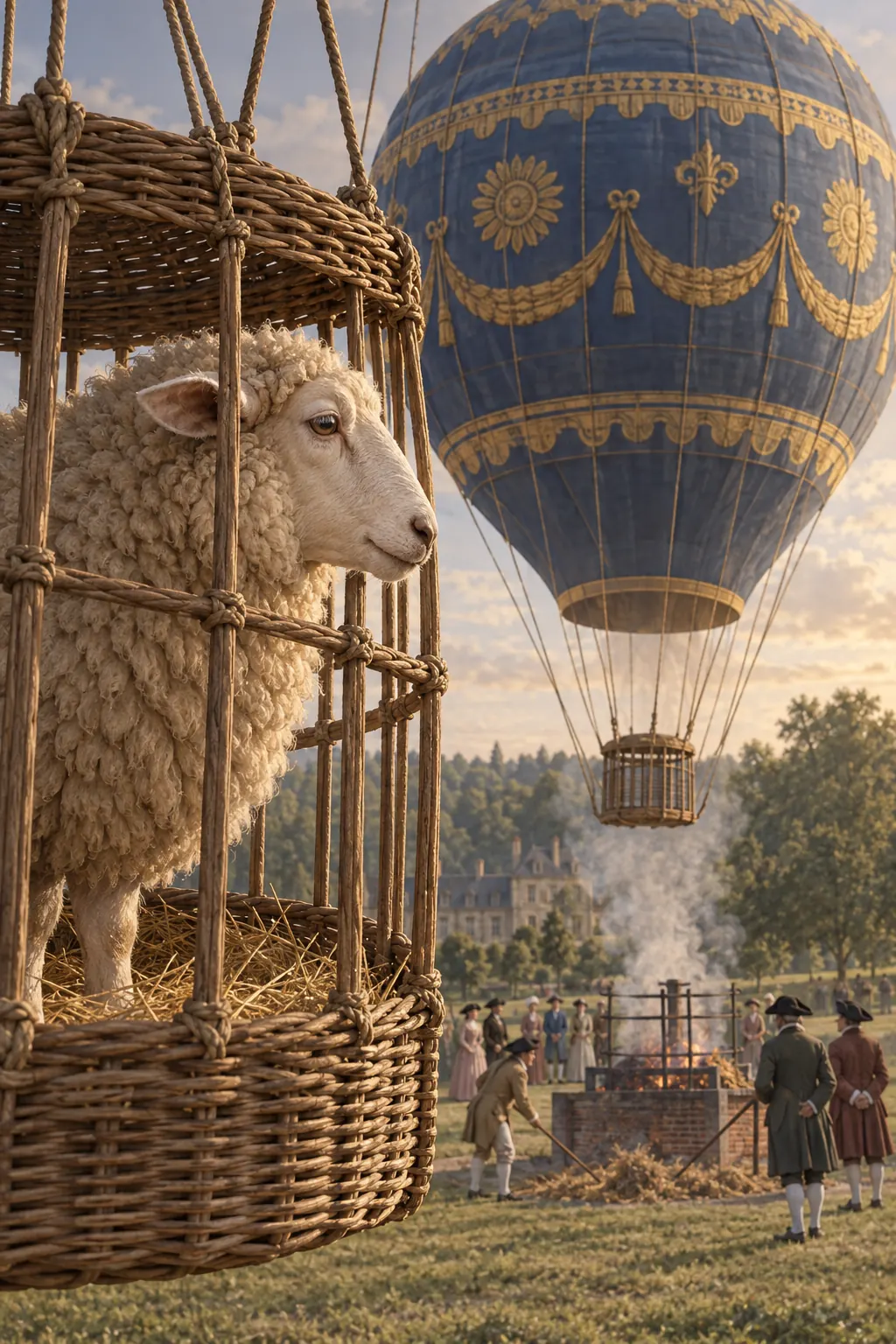
The sheep stood in for a person. Its body was thought to work enough like ours that watching the sheep was a way of watching what height might do to a person.
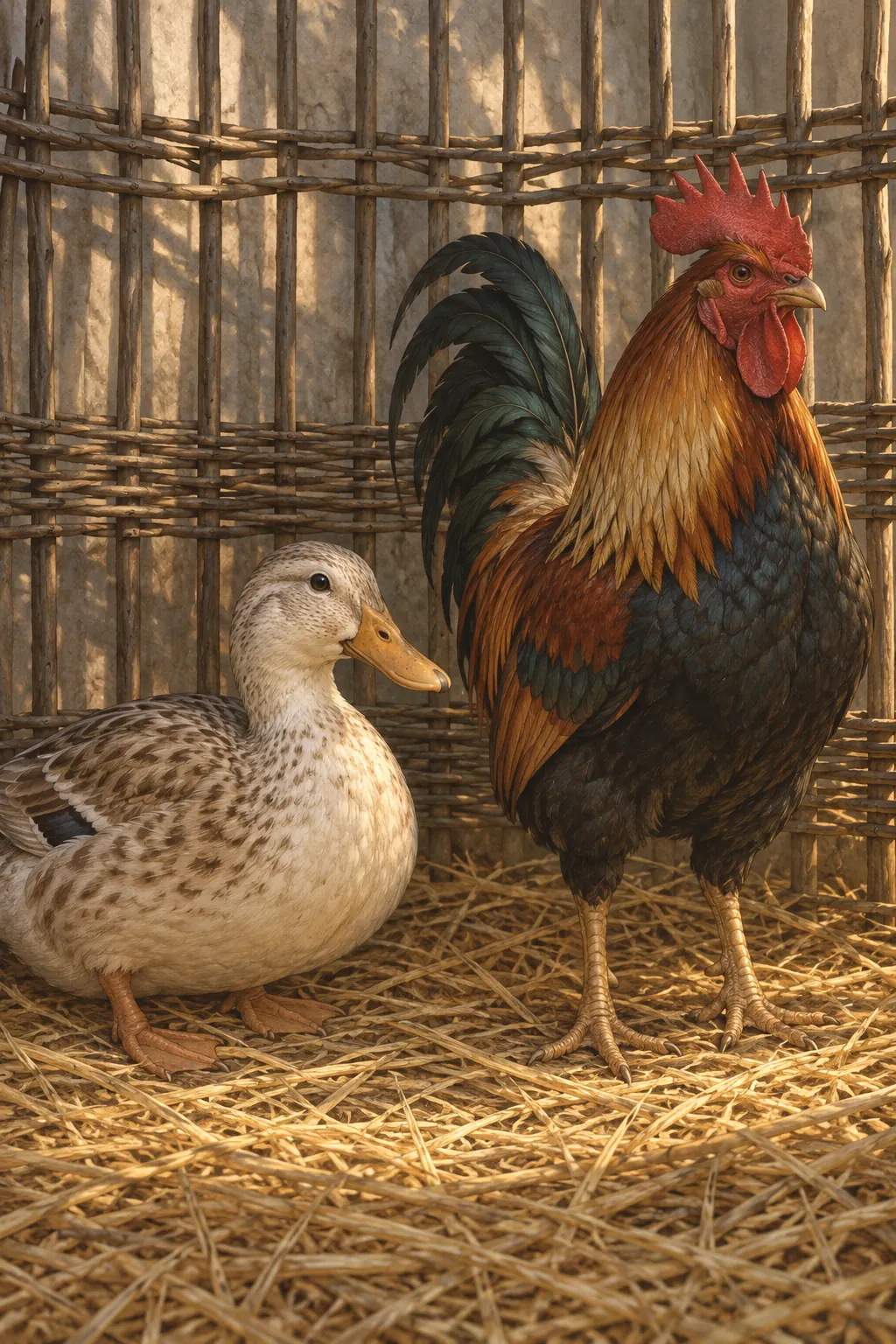
The duck was there because it could fly; if it suffered, the cause was not height alone. And the rooster? Accounts agree that no one knows why it was chosen.
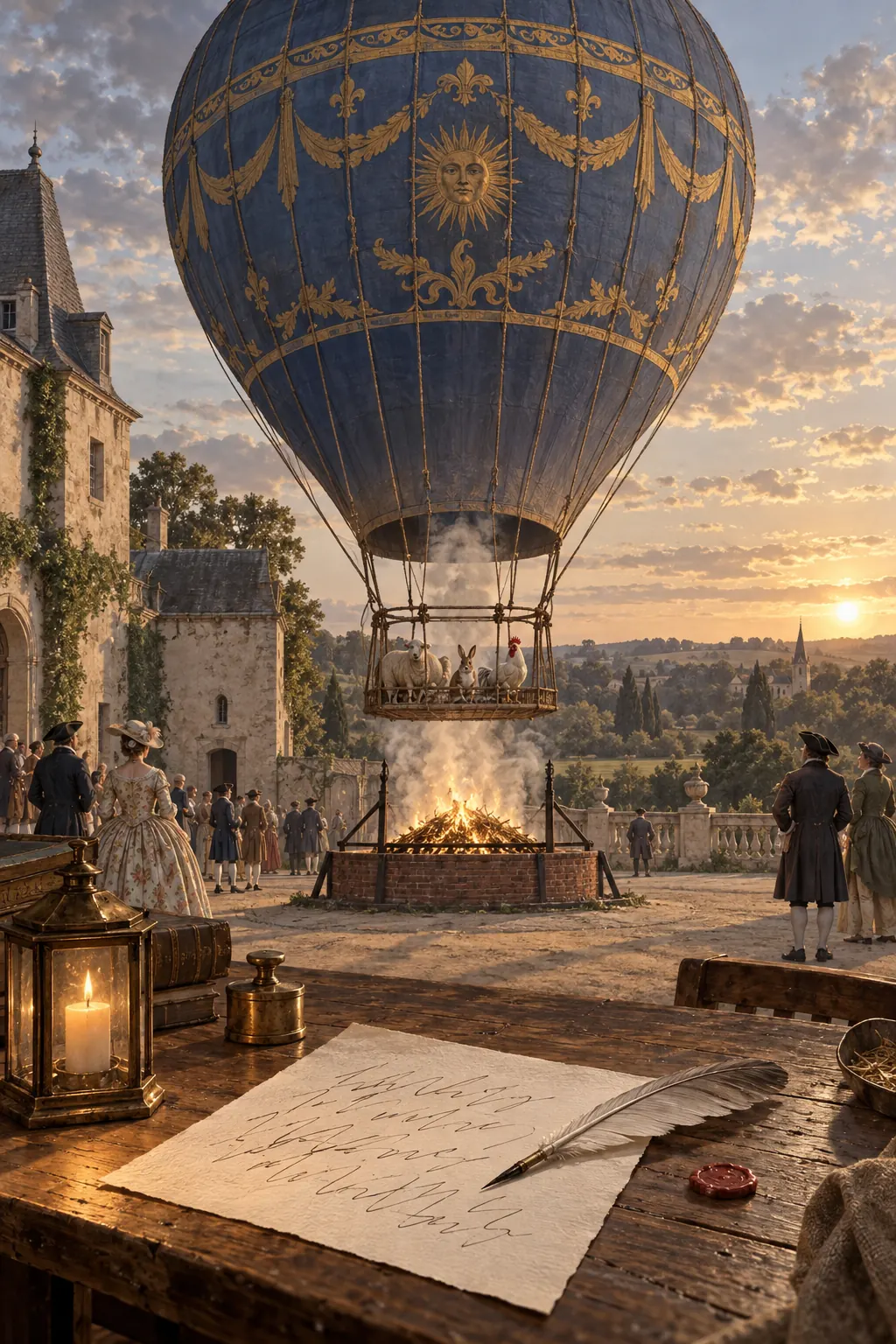
By modern standards it was a rough experiment. There was only one of each animal, and the height was not measured the way it would be now. What they were trying to find out, though, was clear.
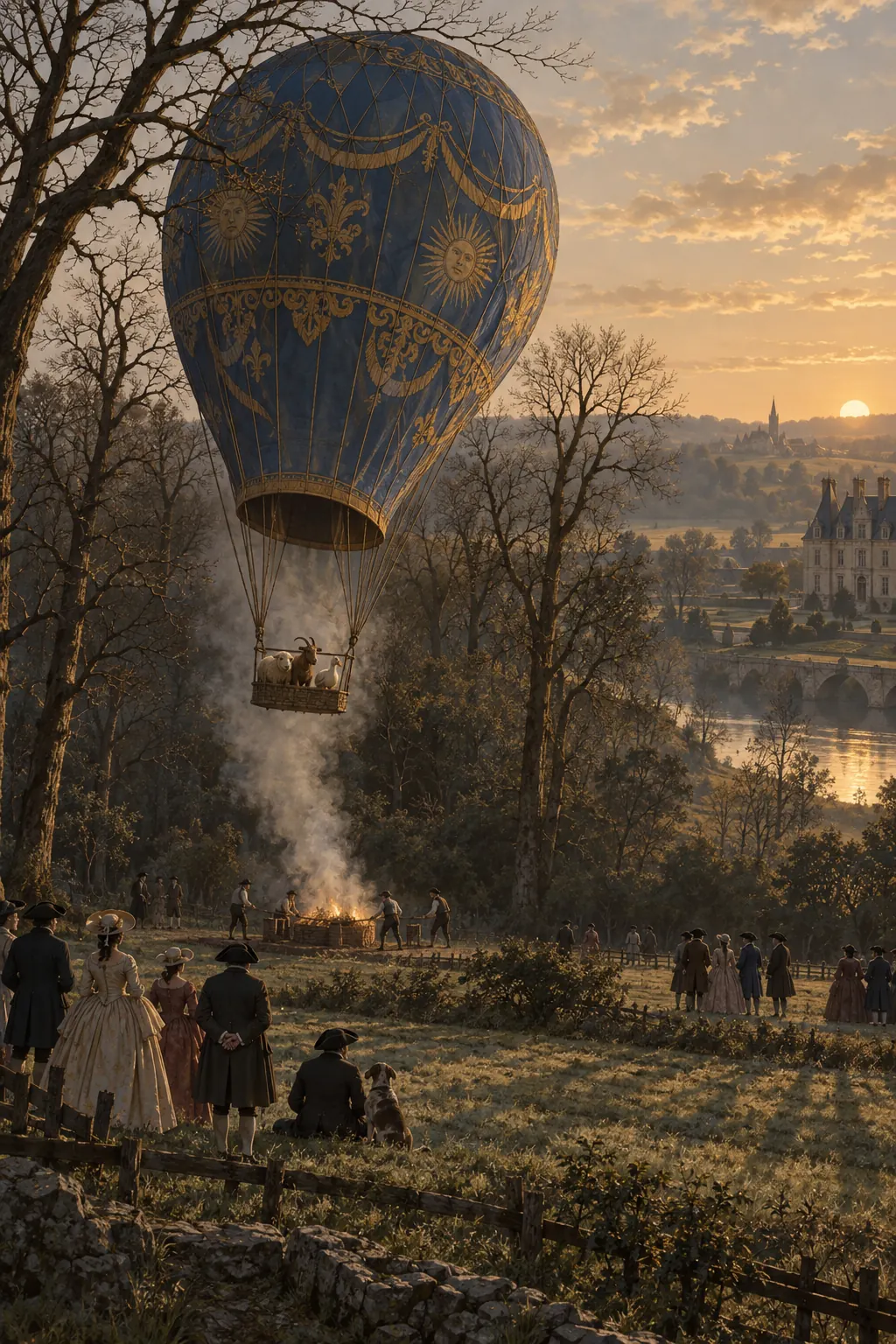
The balloon stayed up about eight minutes, went some three kilometres and came down in woodland. Accounts of its greatest height range from about 460 to 600 metres. All three were alive.
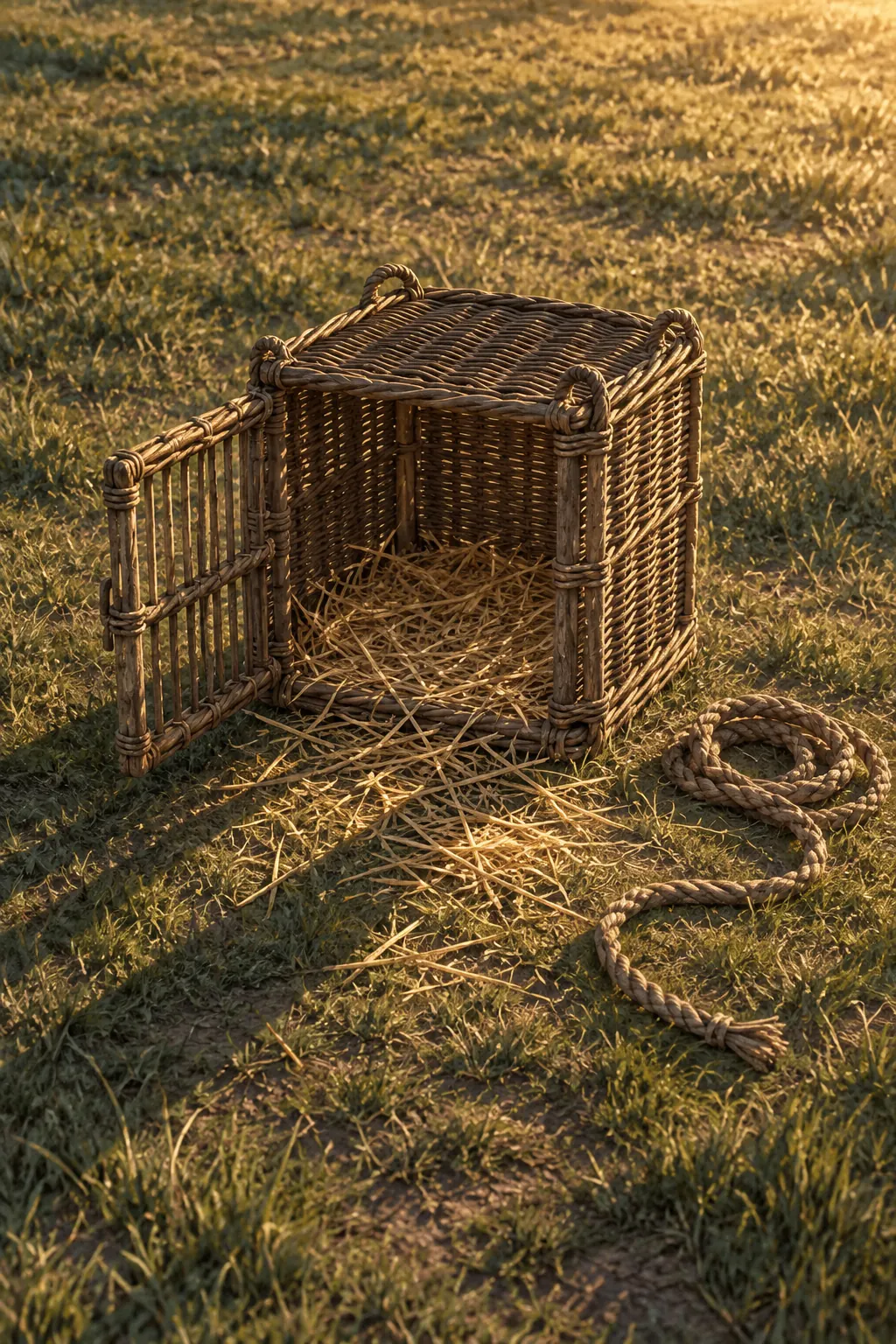
Two months after that, a person went up. What became of the three animals afterwards is written differently in different accounts, so this is where the record stops.
What the records say
The Château de Versailles records that on 19 September 1783 a sheep, a duck and a cockerel were sent up in a balloon in front of Louis XVI and the royal family, that the balloon rose about 600 metres and came down eight minutes later, 3.5 km away, in the Wood of Vaucresson, and that the animals were found alive. The Linda Hall Library gives the height as about 1,500 feet.
The Linda Hall Library records that the sheep was thought to resemble a human in its physiology and that the duck could fly, and says that “no one seems to know why the rooster was selected.” The National Air and Space Museum’s print record says that all three animals survived. Two months later a person went up.
Sources
- "The first hot air balloon flight" — Château de Versailles en.chateauversailles.fr
- "Joseph and Étienne Montgolfier", Scientist of the Day (2016) — Linda Hall Library www.lindahall.org
- "The day a duck, a sheep and a cockerel took to the air in 1783" — British Balloon Museum & Library www.bbml.org.uk
- "Expérience fait à Versailles le 19 Sept 1783", collection object — Smithsonian National Air and Space Museum airandspace.si.edu
More stories

In 1687 a single shell turned the Parthenon into a ruin
In 1687 the Ottoman garrison on the Acropolis kept gunpowder inside the Parthenon. During a Venetian siege a shell set it off, and the temple became a ruin.
The Mona Lisa was stolen in 1911, and that is when the world learned its name
On 21 August 1911 the Mona Lisa was taken from the Louvre. It was missing for over two years; the Louvre says the theft made the painting world-famous.

In 1859 a storm from the Sun ran the telegraph lines with the batteries unplugged
On 1 September 1859 Richard Carrington saw a white-light flare on the Sun. Within a day auroras filled the sky and telegraph operators worked without batteries.
Get the week in history
One email a week: the new articles, and what was happening elsewhere at the same moment. Free, no ads, unsubscribe any time. How we handle your email.
Text licensed CC BY-NC-ND 4.0. Found an error? Tell us.