In 1859 a storm from the Sun ran the telegraph lines with the batteries unplugged
On 1 September 1859 Richard Carrington saw a white-light flare on the Sun. Within a day auroras filled the sky and telegraph operators worked without batteries.
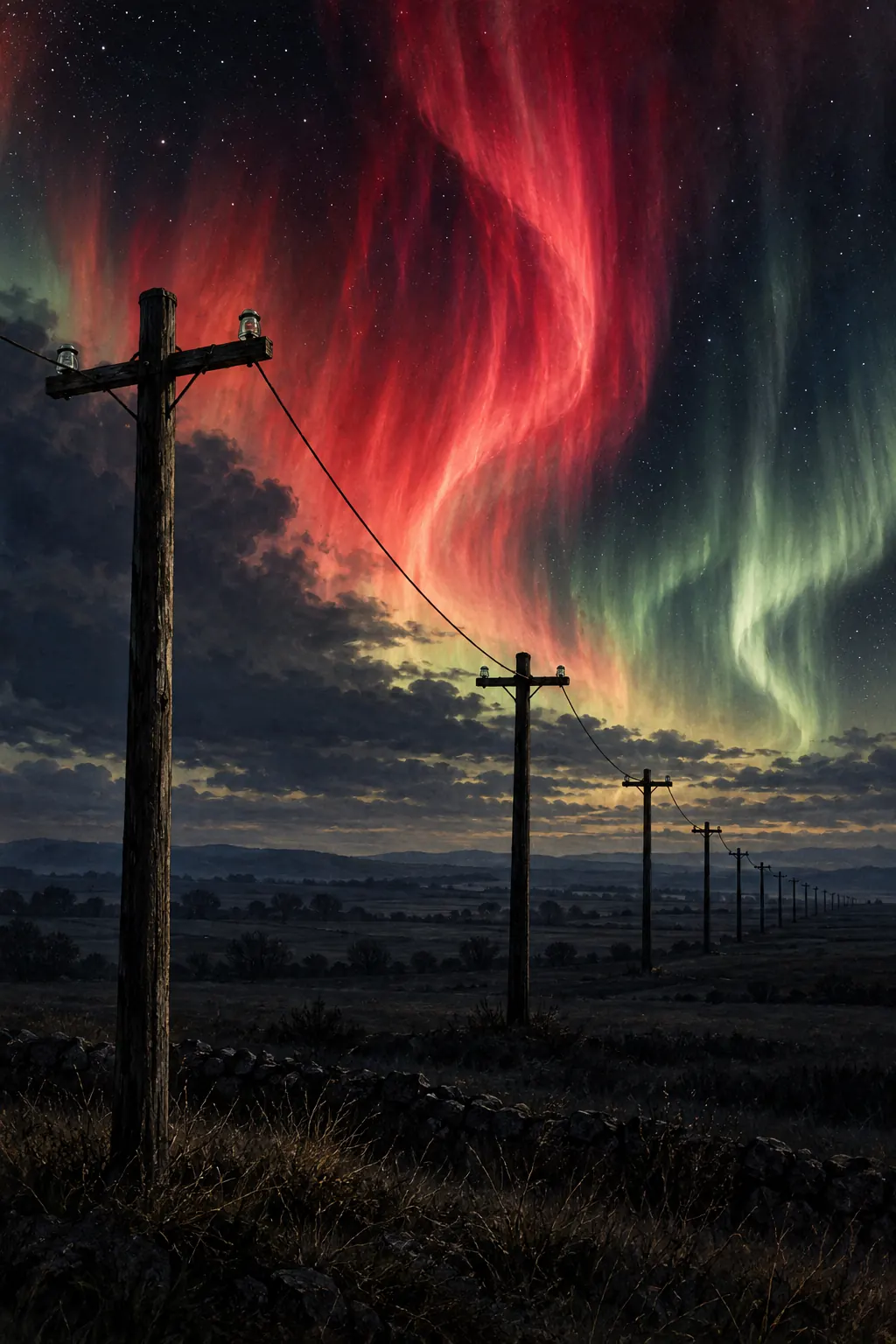
How telegraph operators sent messages with their batteries unplugged.
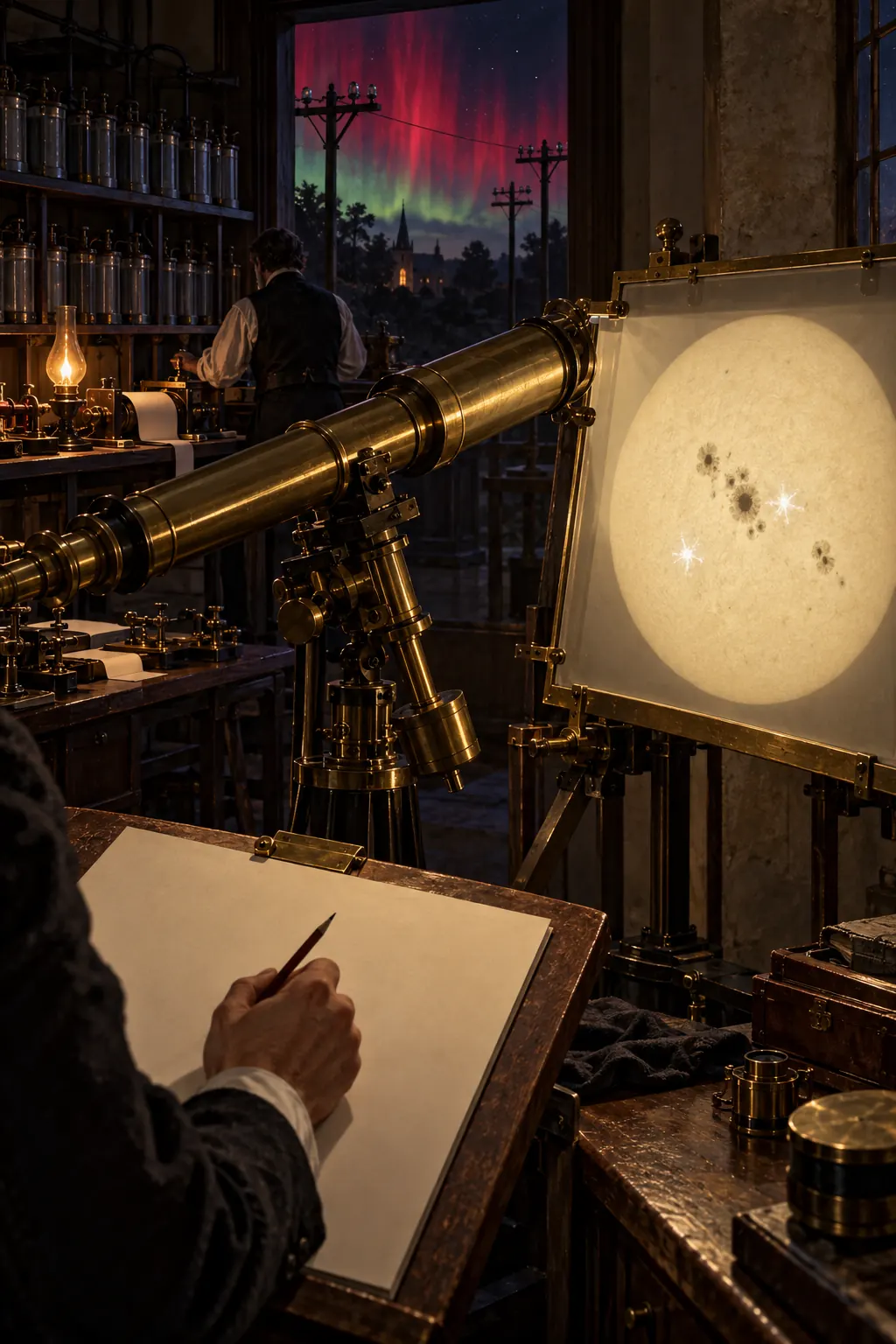
On the morning of 1 September 1859 the English astronomer Richard Carrington was drawing sunspots from the Sun's image projected by his telescope. At 11:18, two patches of white light burst out over the spots, as bright as sunlight itself, he wrote.
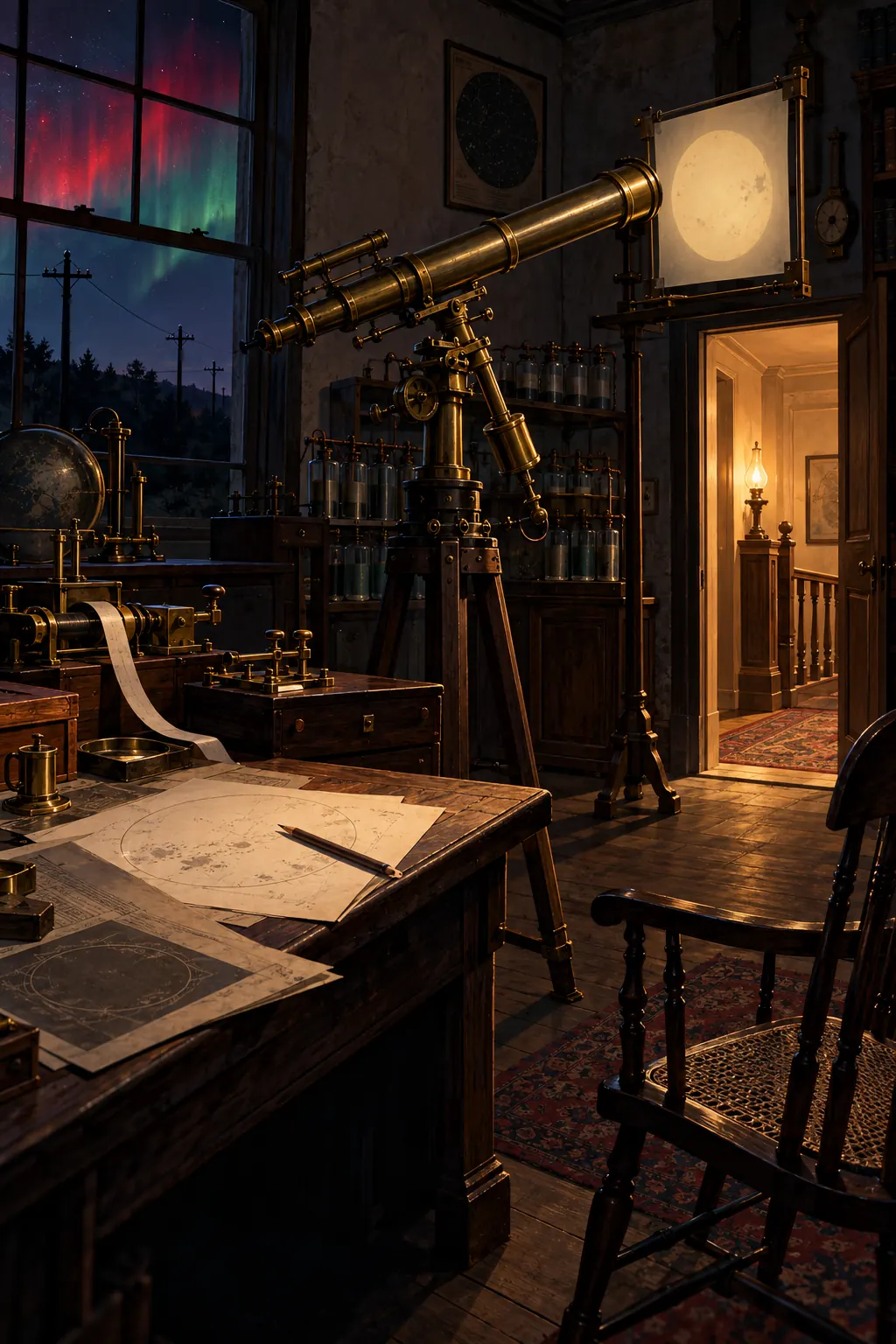
He ran to fetch someone to see it and was back within a minute, but the light had already faded. It was gone in five minutes. At the same moment another Londoner, Richard Hodgson, saw it on his own. And within a day, something happened on Earth.
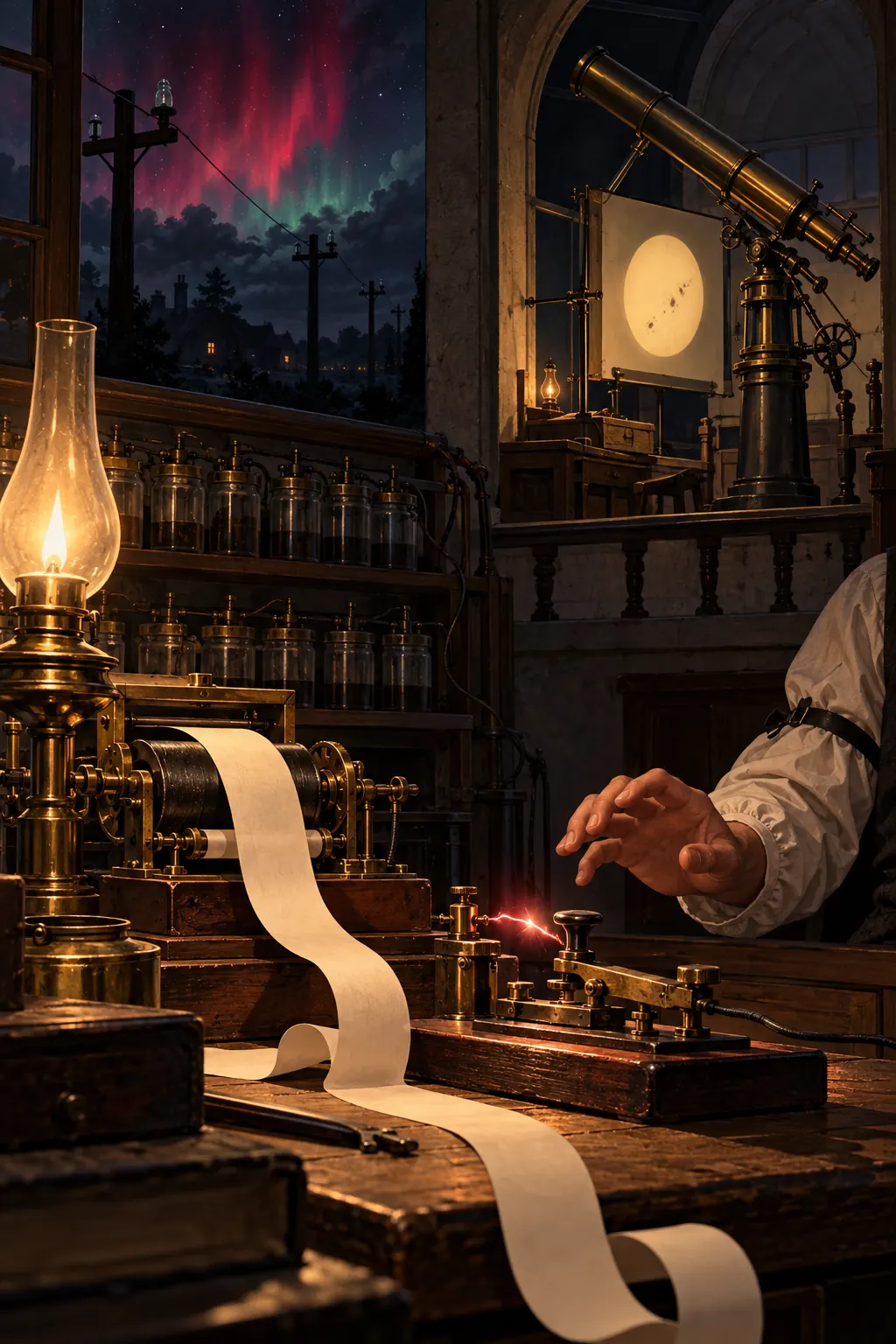
In telegraph offices around the world the instruments began to move on their own. Signals no one had sent came in, and sparks jumped from the lines. One operator in Washington told a newspaper he was shocked when his forehead brushed a ground wire.
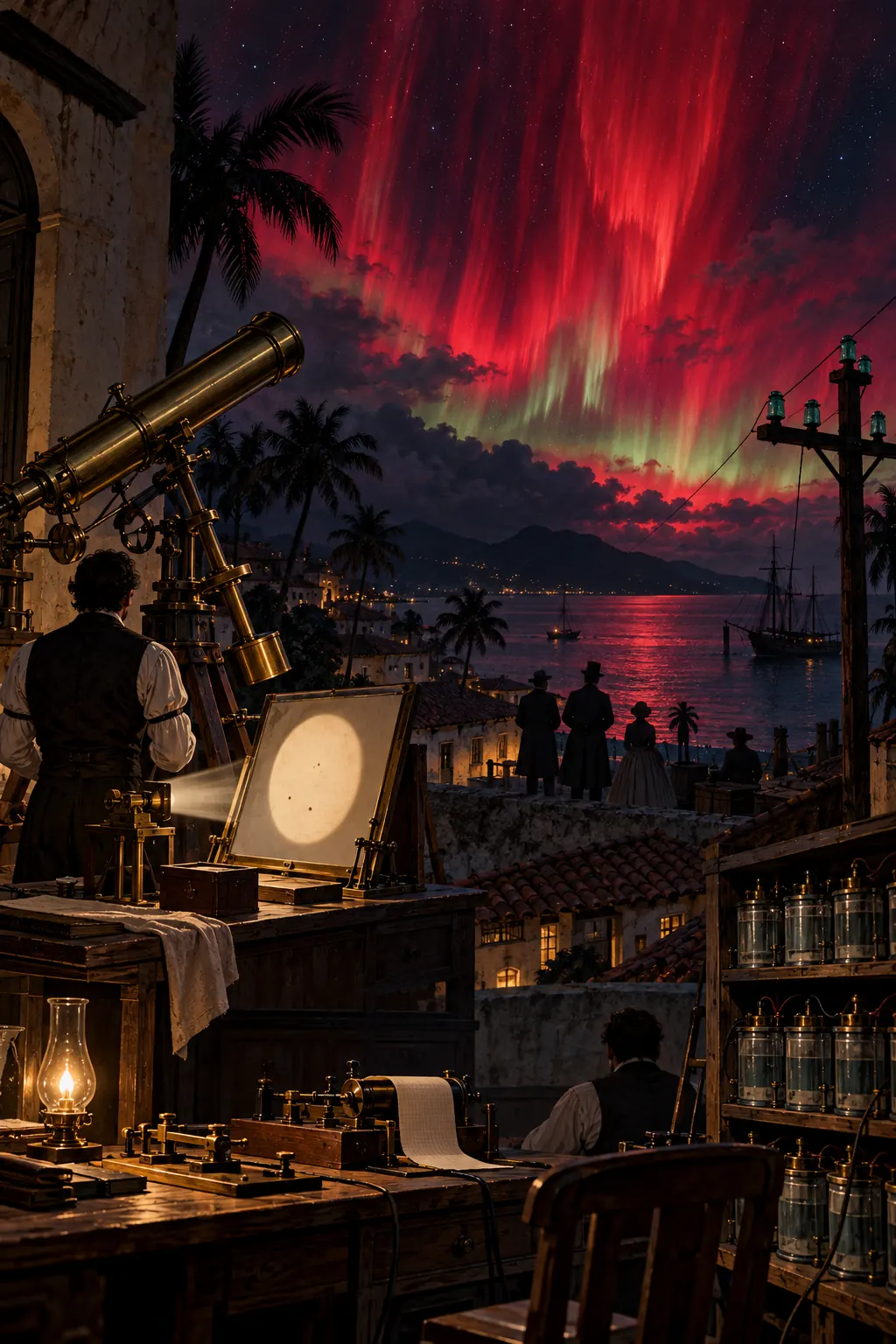
The sky filled with aurora. It was seen even in Cuba, where it almost never appears. In some places, accounts say, it was bright enough to read a newspaper by. The storm was pushing current into the wires by itself.
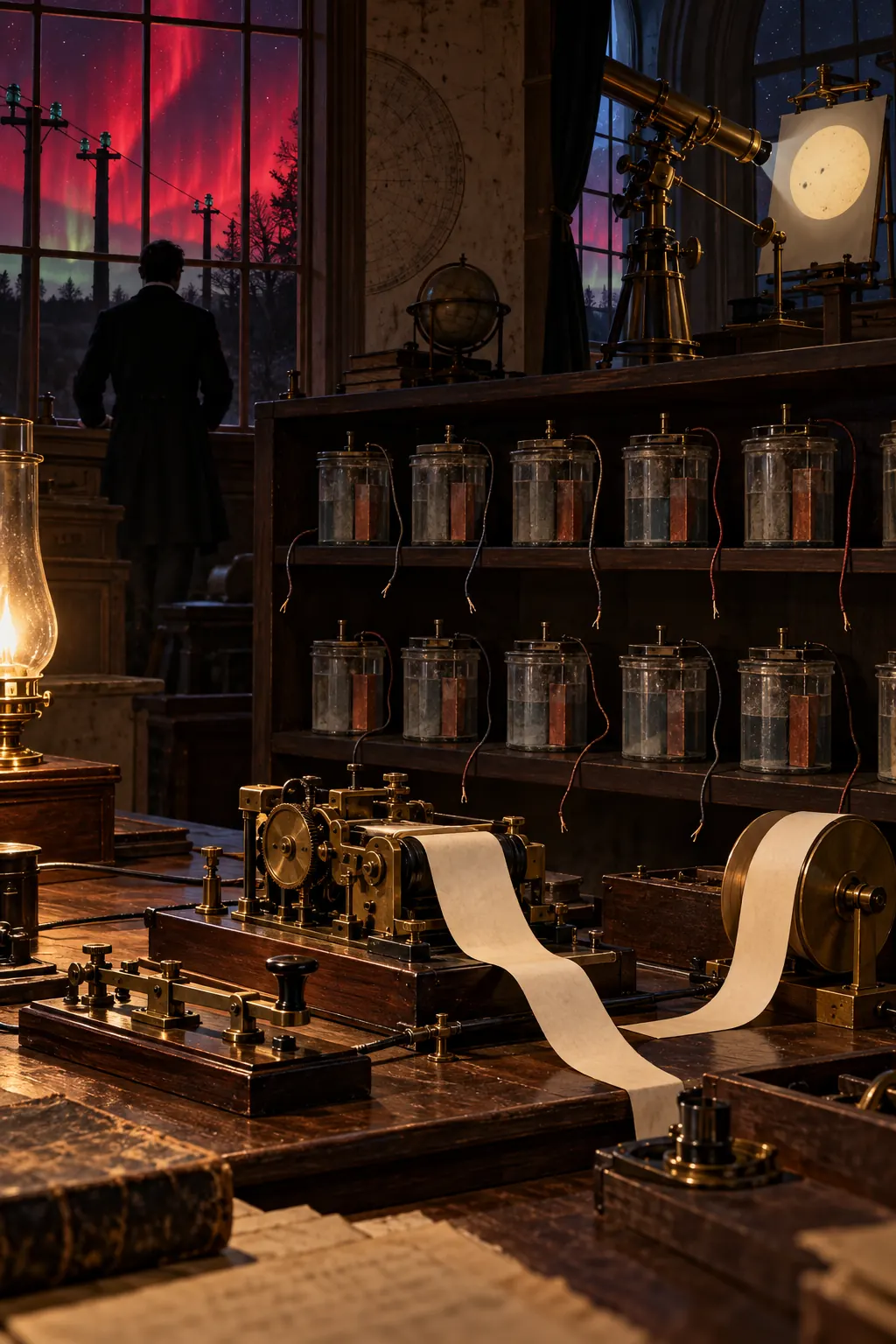
So some operators unplugged their batteries altogether. A conversation printed in the papers shows operators in Boston and Portland disconnecting theirs and working the line for about two hours on that current alone. It worked better, they said.
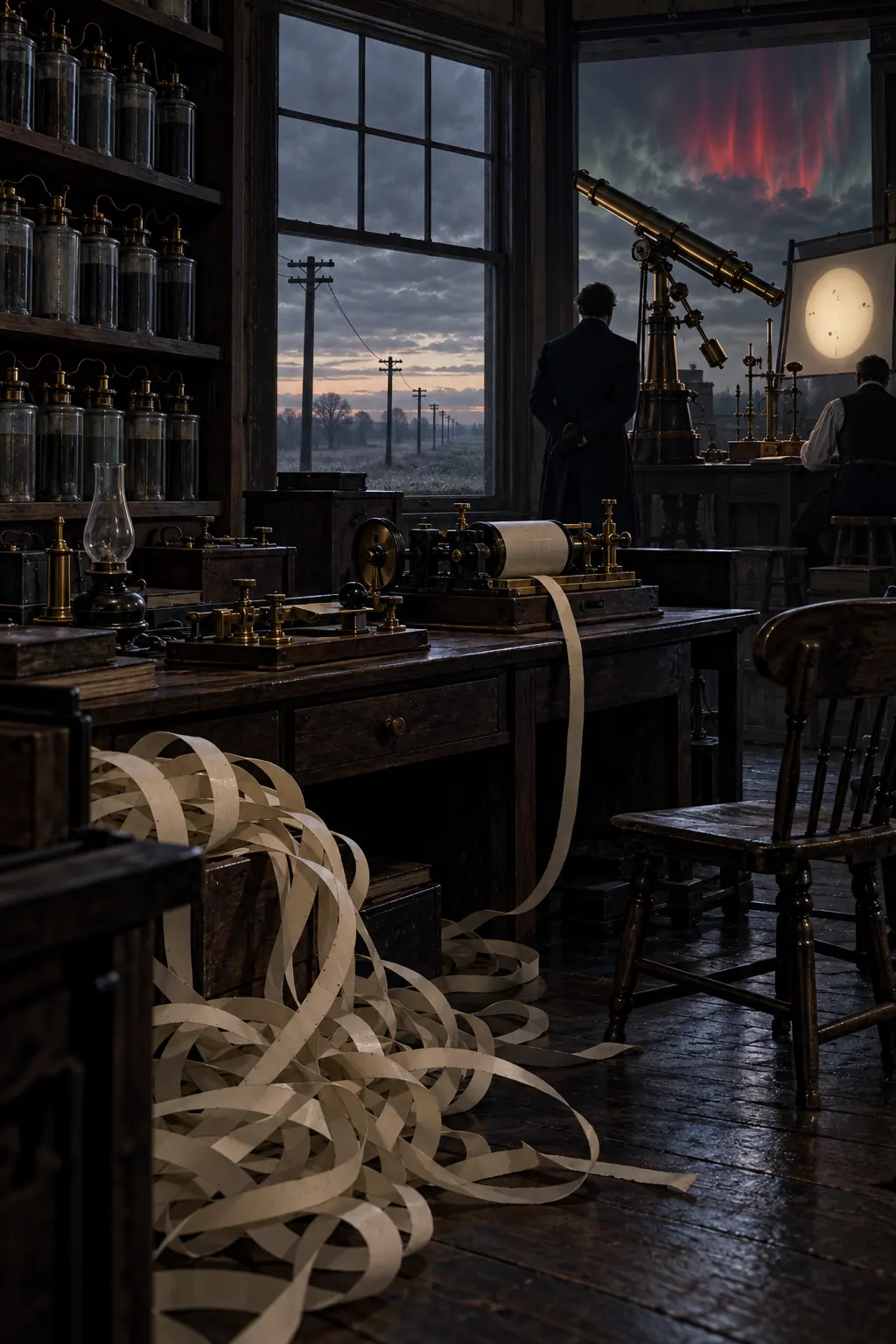
For most, though, it was the opposite. The world then had about 200,000 km of telegraph line; a large share was affected, and many lines were unusable for eight hours or more. So where had this current come from?
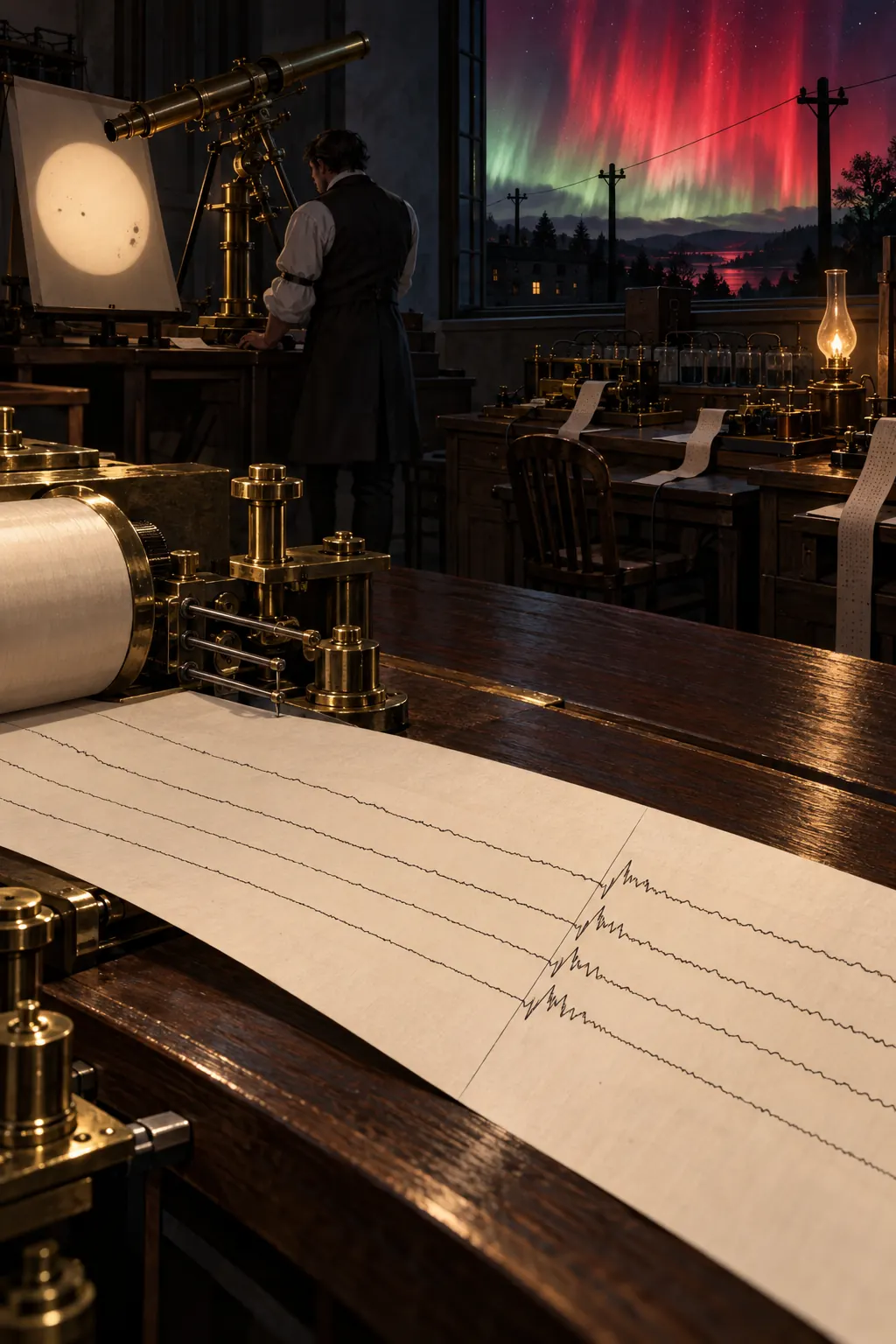
A day or two later Carrington called at Kew Observatory outside London. Its magnetic recorders had jumped at the very moment he saw the white light.
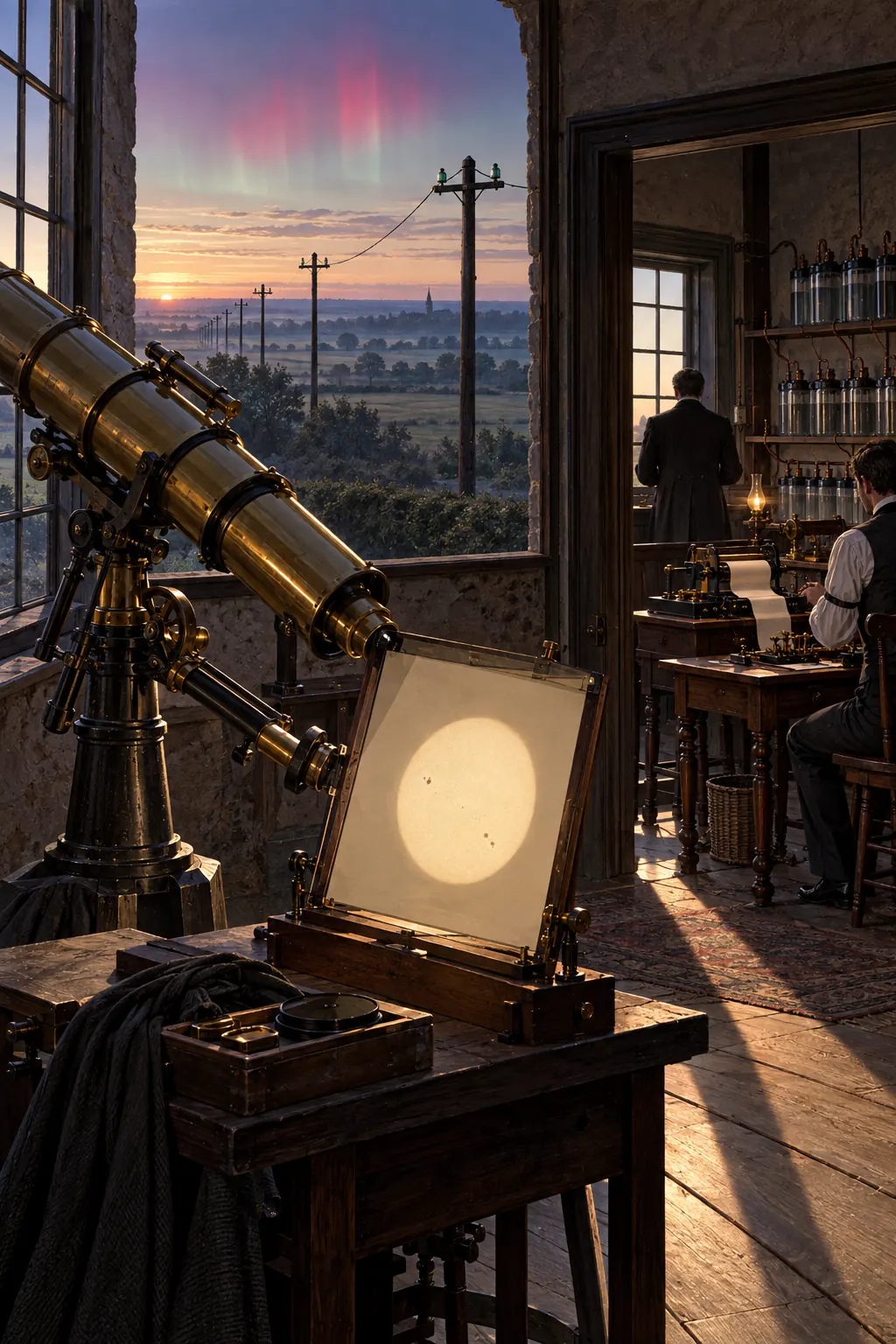
Scientists at the time were careful to say it might be coincidence. Today we know eruptions on the Sun drive magnetic storms on Earth. This is counted as the first time that link was observed, and it is called the Carrington Event.
What the records say
Richard Carrington’s own report in the Monthly Notices of the Royal Astronomical Society records that on 1 September 1859, at 11:18, two patches of intensely bright white light broke out over a group of sunspots and faded within five minutes. Richard Hodgson reported in the same journal that he had seen the same outburst independently.
Balfour Stewart’s paper for the Royal Society records that the magnetic instruments at Kew Observatory were disturbed at the very moment Carrington saw the light. Newspaper accounts collected by NASA researchers include an exchange between telegraph operators in Boston and Portland who disconnected their batteries and worked the line for about two hours on the auroral current alone. A 2006 study in Advances in Space Research estimates that about 200,000 km of telegraph line was affected, many lines for eight hours or more.
Sources
- R. C. Carrington, "Description of a Singular Appearance seen in the Sun on September 1, 1859", Monthly Notices of the Royal Astronomical Society 20 (1859) — NASA ADS articles.adsabs.harvard.edu
- R. Hodgson, "On a curious Appearance seen in the Sun", Monthly Notices of the Royal Astronomical Society 20 (1859) — NASA ADS articles.adsabs.harvard.edu
- Balfour Stewart, "On the Great Magnetic Disturbance … as recorded by Photography at the Kew Observatory", Philosophical Transactions of the Royal Society (1861) — Internet Archive archive.org
- J. L. Green and S. Boardsen, "Duration and extent of the great auroral storm of 1859", Advances in Space Research (2006) — PubMed Central www.ncbi.nlm.nih.gov
- J. L. Green et al., "Eyewitness Reports of the Great Auroral Storm of 1859" — NASA Technical Reports Server ntrs.nasa.gov
- "Five historically huge solar events" — National Oceanic and Atmospheric Administration www.noaa.gov
More stories
The night of the Martian broadcast: most of America was not listening
On 30 October 1938 a radio play reported Martians landing in New Jersey. A ratings survey that night found only 2% of homes it called were listening.
Locked under the lead roof of the Doge's Palace, Casanova got out through the ceiling
In July 1755 Giacomo Casanova was locked in the Leads, the cells under the roof of the Doge's Palace. On 1 November 1756 he escaped across the roof.
A tank of molasses burst in Boston and the street was buried
On 15 January 1919 a molasses tank in Boston's North End burst. The tank had leaked from the start and had never been tested; a court found it unsound.
Get the week in history
One email a week: the new articles, and what was happening elsewhere at the same moment. Free, no ads, unsubscribe any time. How we handle your email.
Text licensed CC BY-NC-ND 4.0. Found an error? Tell us.