Locked under the lead roof of the Doge's Palace, Casanova got out through the ceiling
In July 1755 Giacomo Casanova was locked in the Leads, the cells under the roof of the Doge's Palace. On 1 November 1756 he escaped across the roof.
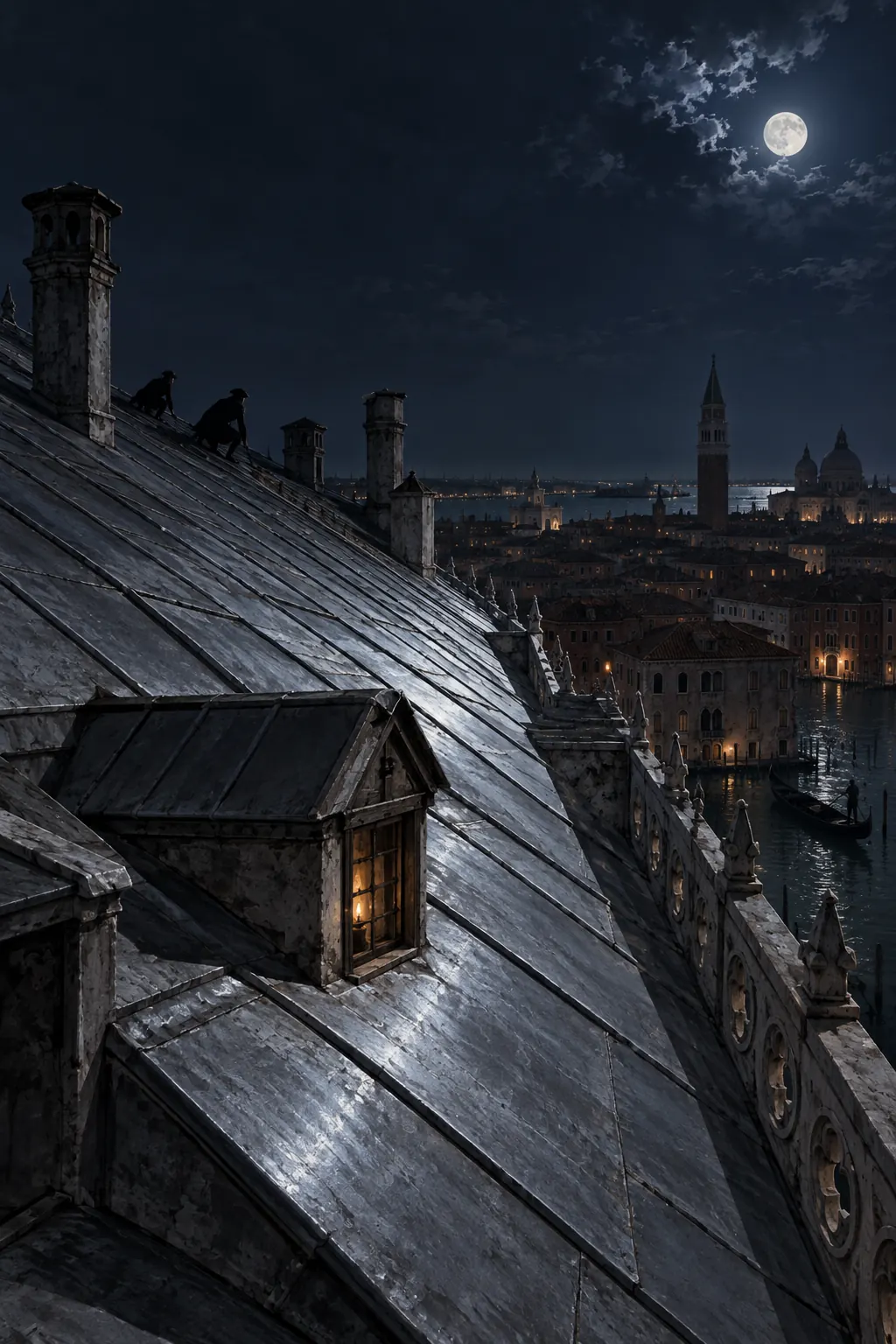
How a prisoner under the roof got out through the ceiling.
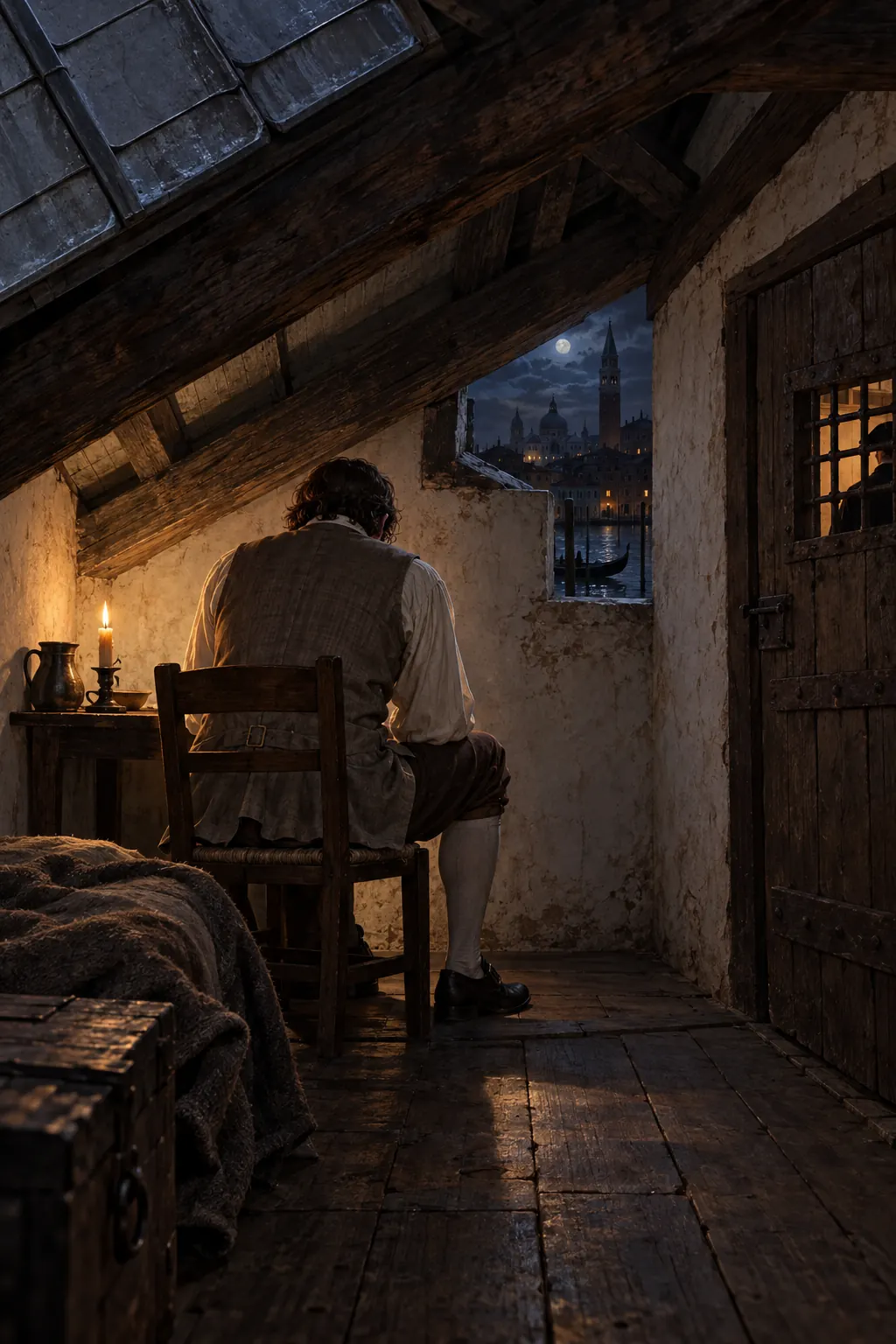
At the top of the Doge's Palace in Venice, right under the lead roof, there were cells. That is why they were called the Piombi, the Leads. On 26 July 1755 Giacomo Casanova was locked in one of them.
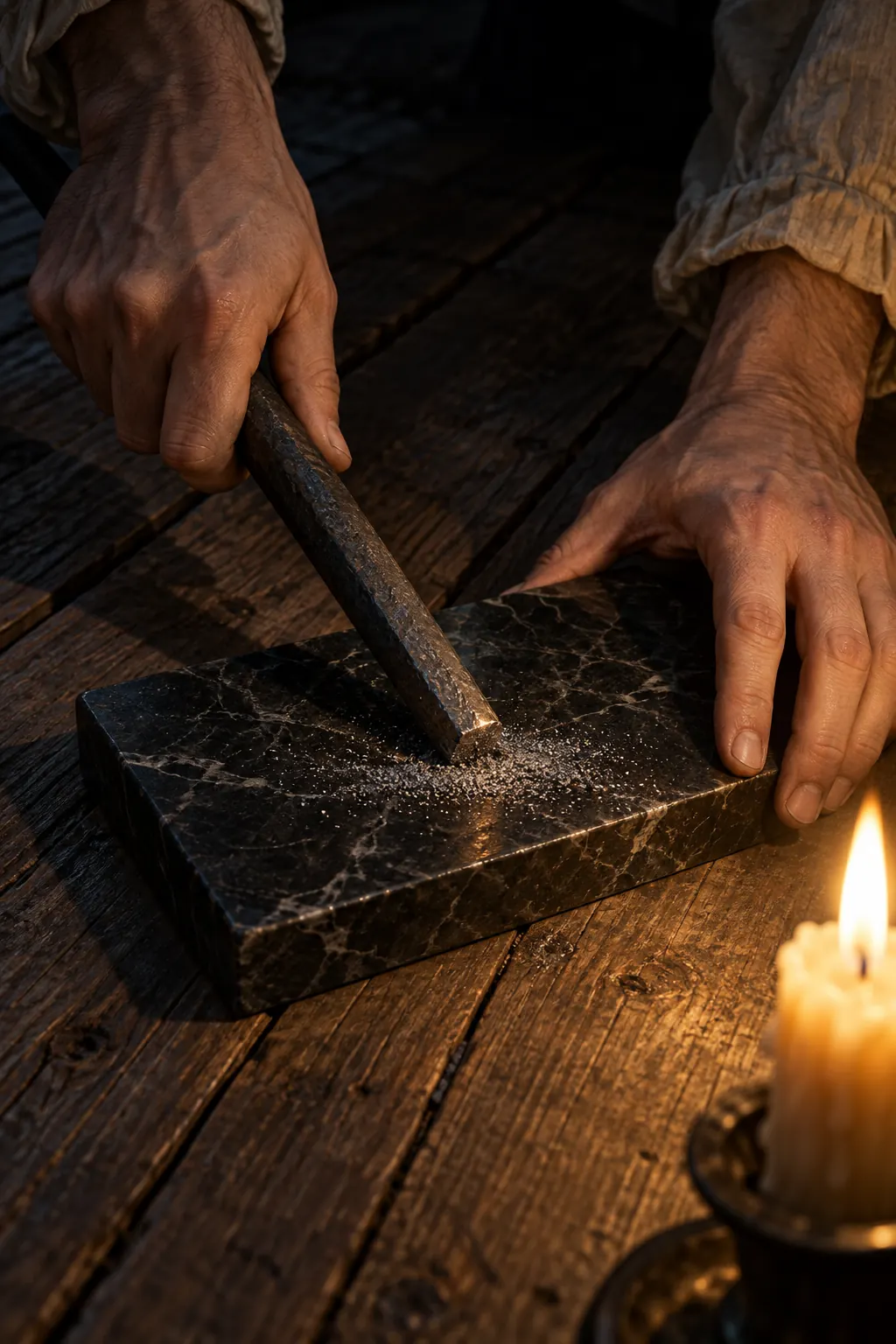
By his own account, no one even told him the charge. Instead, walking in the attic, he picked up an iron bar and ground its end sharp on a piece of black marble. What remained was where to dig.
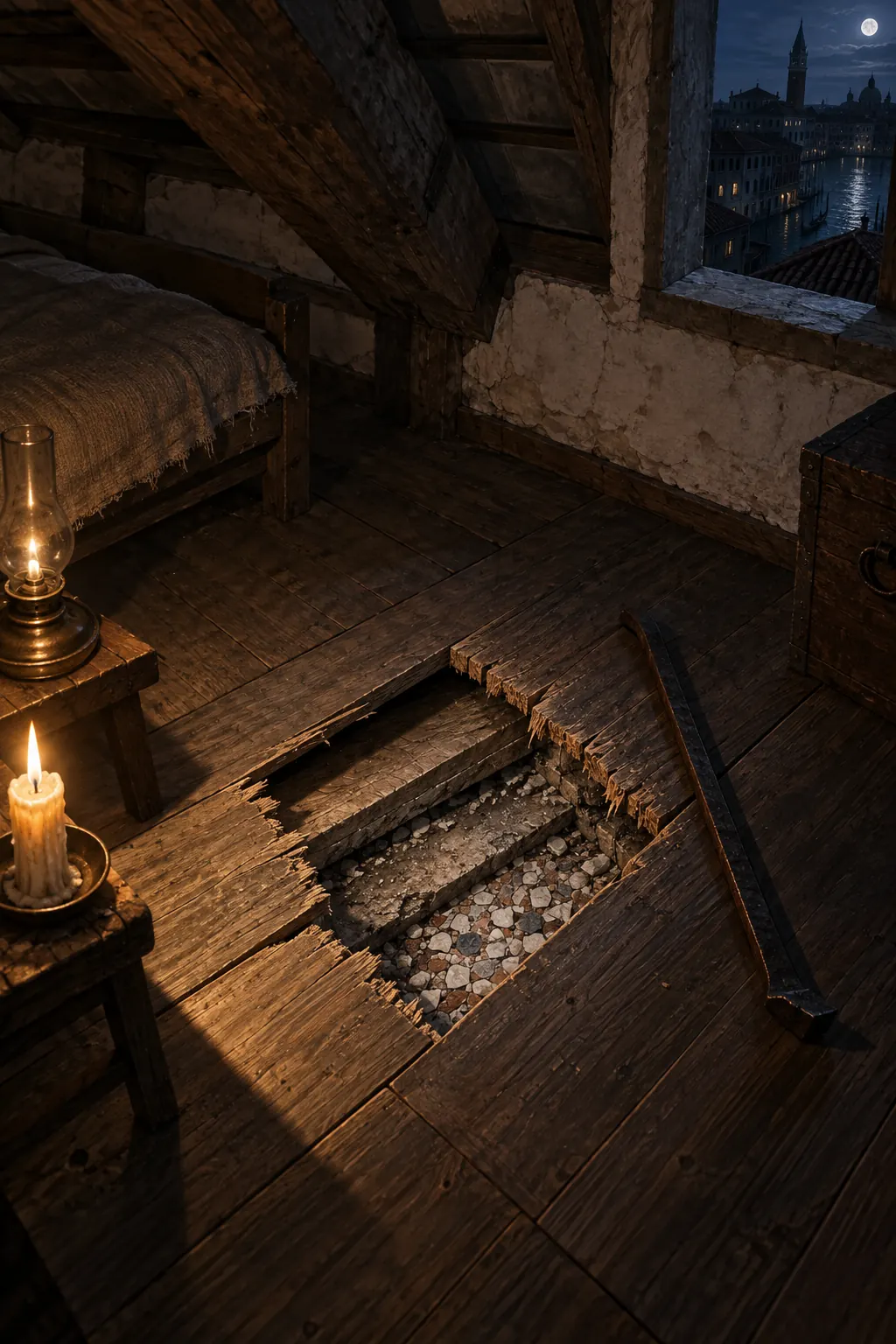
He chose the floor. He cut through three layers of planks and scraped into the stone beneath. When he was almost through, the jailer arrived with good news: he was being moved to a brighter cell.
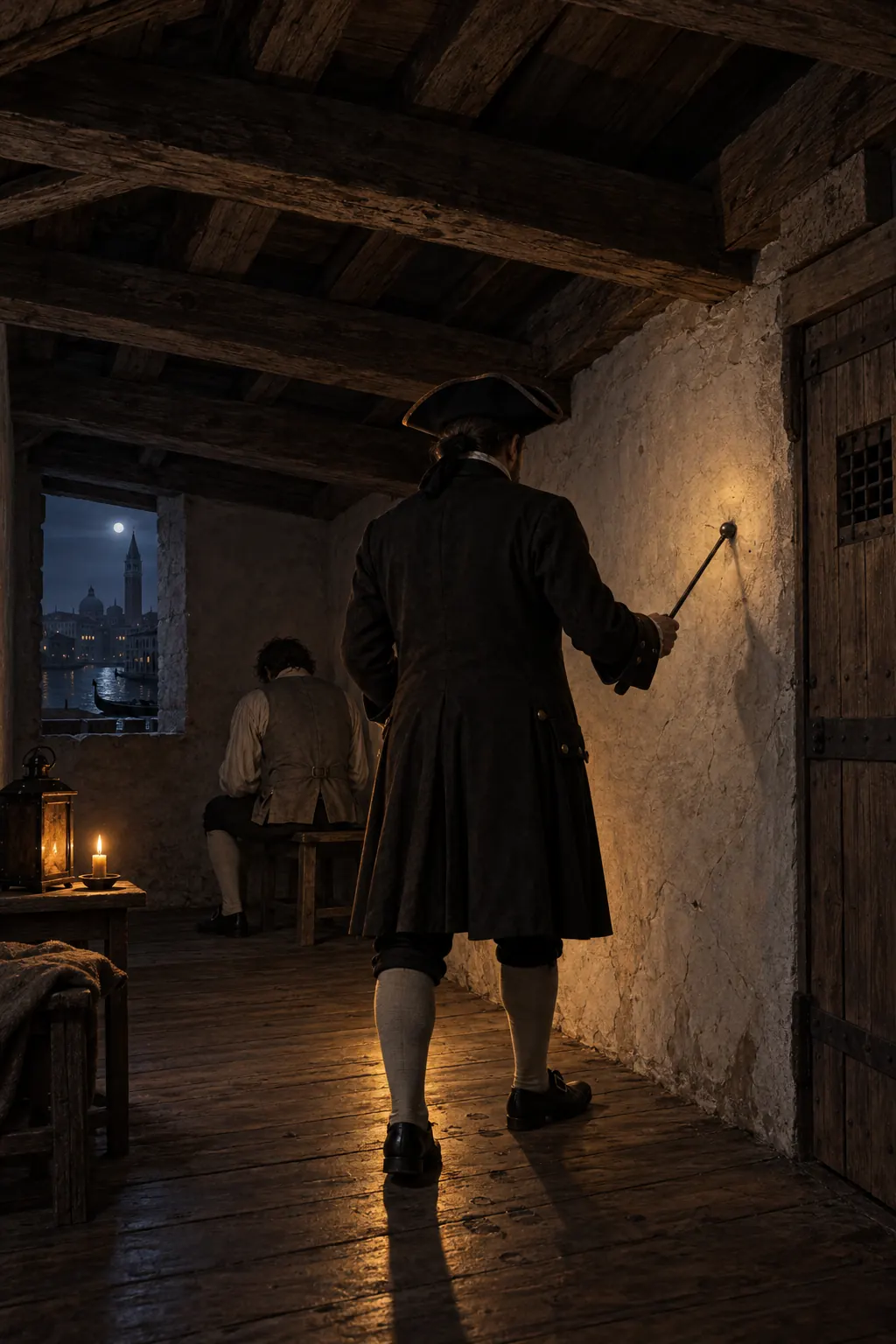
The hole in the old cell was soon found. From then on a guard tapped the walls and floor of the new cell with an iron rod every day. But Casanova noticed one thing. No one ever tapped the ceiling.
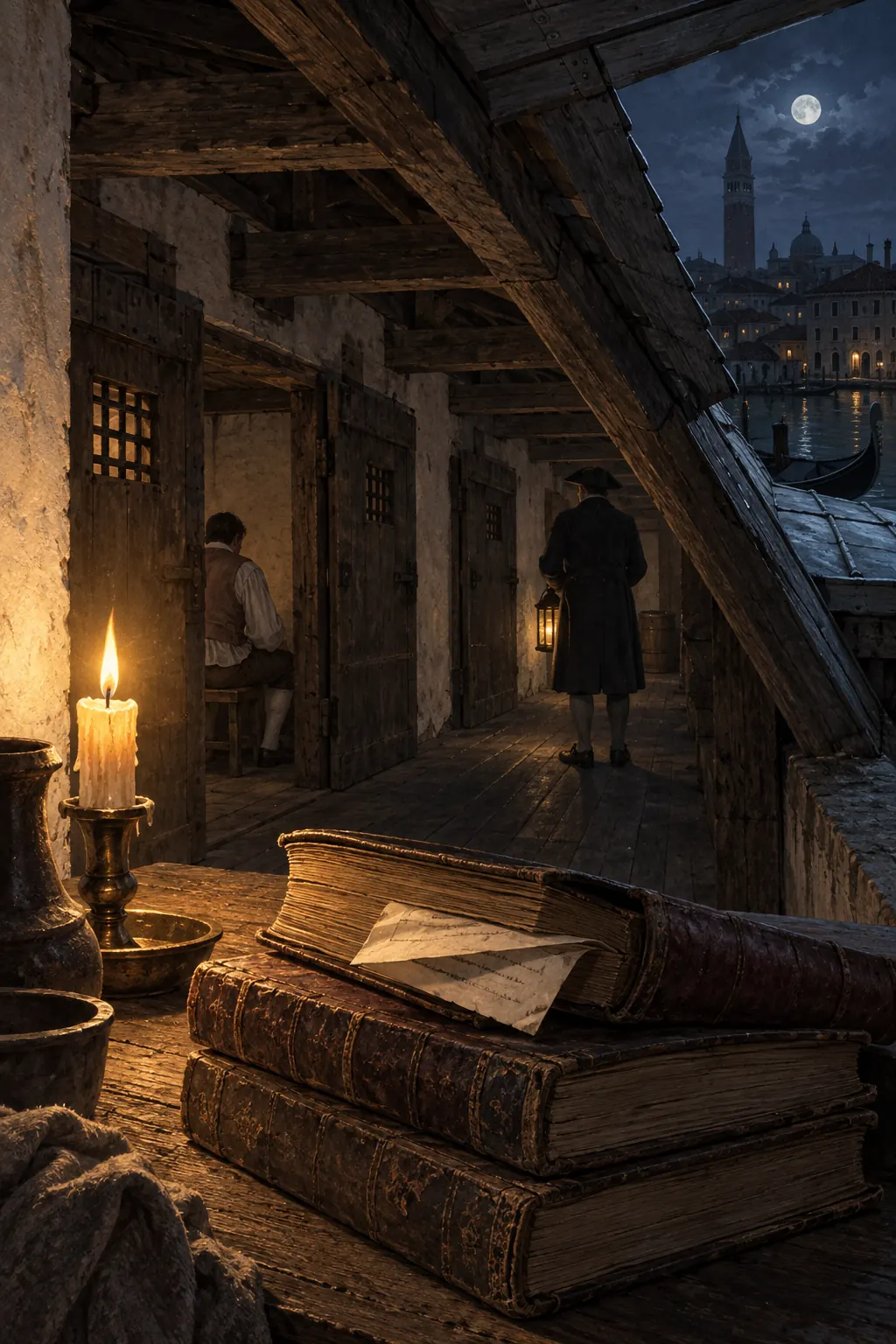
But a ceiling dug from below leaves marks. He needed someone to dig it from above. Hiding letters in the books the jailer carried between cells, he teamed up with a monk nearby, Marino Balbi. Now the bar had to change hands.
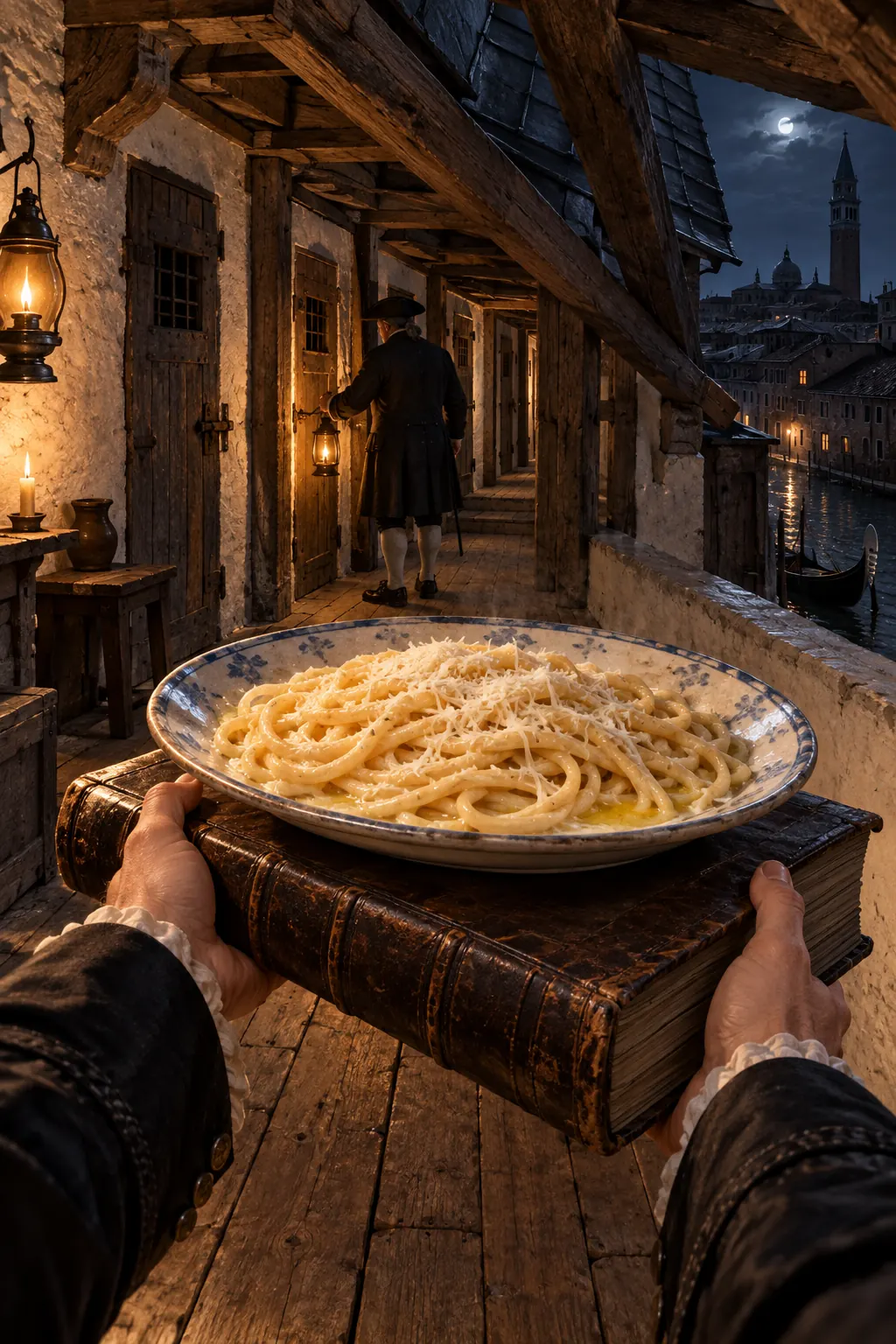
He slid the bar into the spine of a big Bible. It was a little longer than the book. So he set a huge dish of macaroni swimming in butter on top. The jailer, he wrote, watched only the plate the whole way, afraid of spilling the grease.
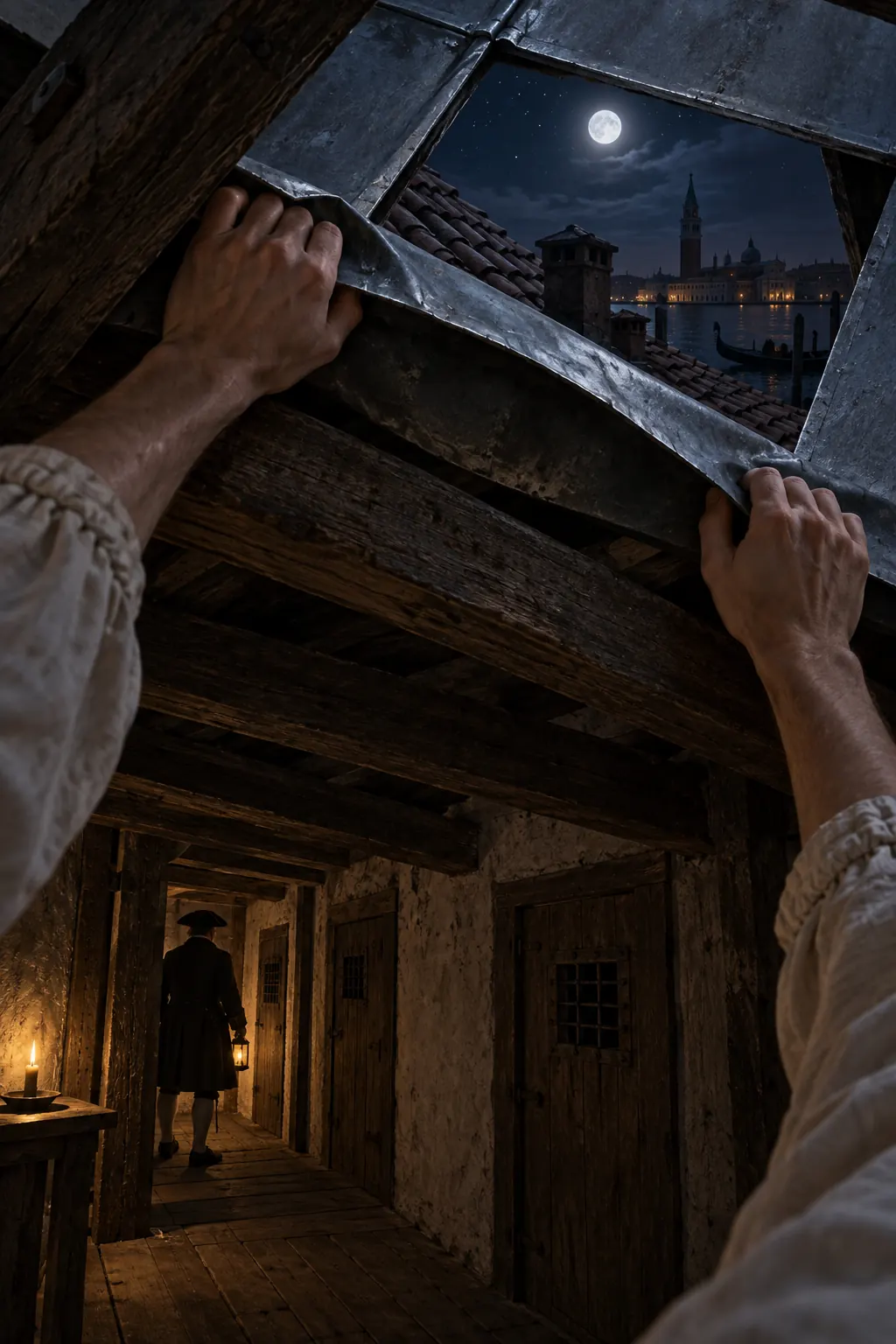
On the night of 31 October, Balbi broke through the ceiling from above. Together they prised up one lead plate from the roof over the attic. Beyond it lay the steep lead roof and Venice at night.
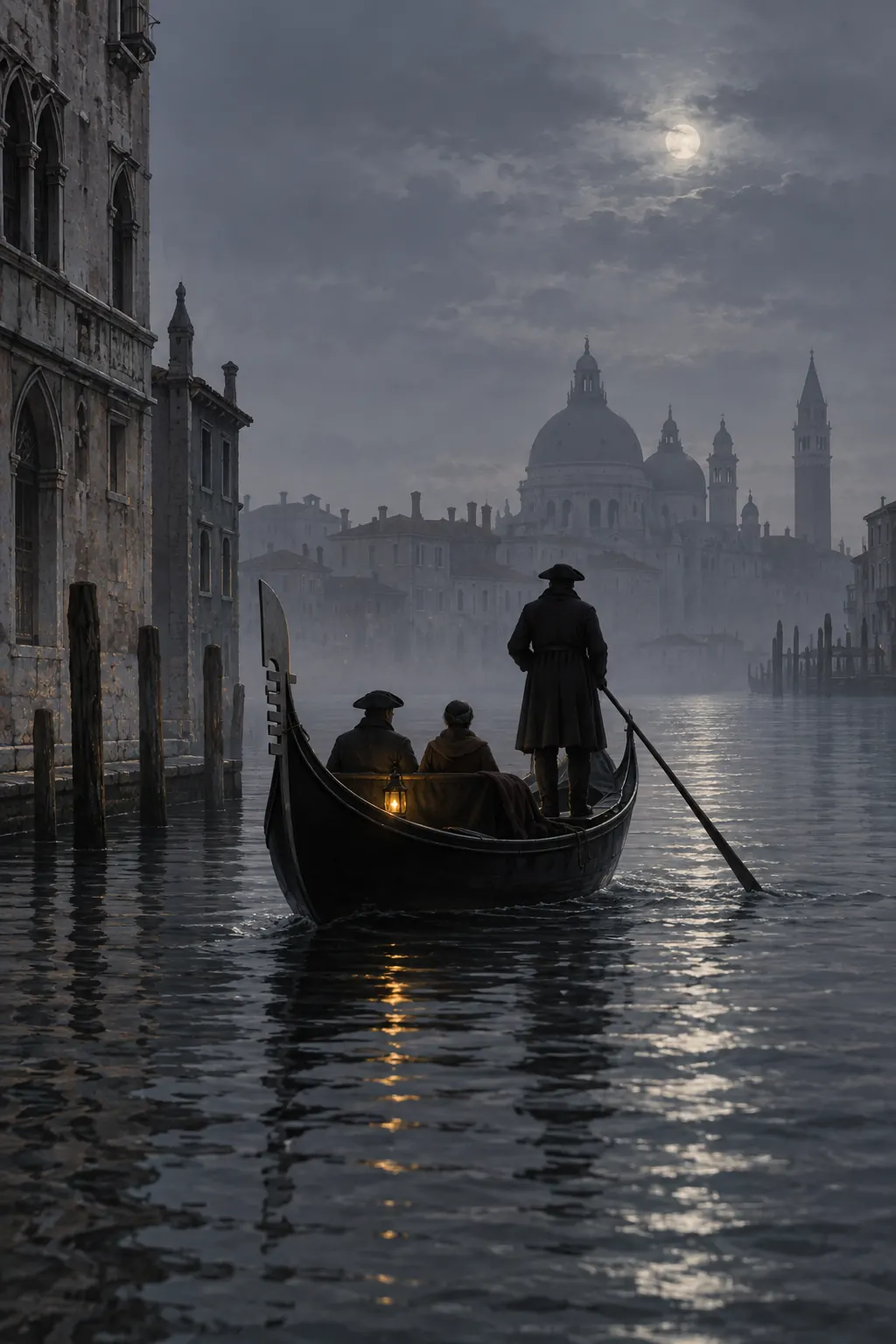
They climbed back down into the palace and, when a door was opened in the morning, walked out down the stairs and straight into a gondola. Most of the details survive only in the book he later wrote himself. It was 1 November 1756, fifteen months after he was locked up.
What the records say
The Bibliothèque nationale de France’s chronology records that Giacomo Casanova was locked in the Piombi, the cells under the lead roof of the Doge’s Palace, on 26 July 1755, and that he escaped on 1 November 1756. The Palazzo Ducale explains that the cells took their name from the lead sheets of the roof.
Almost every detail of the escape comes from Casanova’s own account, published years later: the iron bar ground on marble, the hole in the floor left unfinished when he was moved, the monk Marino Balbi, and the bar carried to Balbi inside a Bible under a dish of macaroni. We know of no independent record of those details, so the story follows his book and says so.
Sources
- Giacomo Casanova, Memoirs, vol. 10, "Under the Leads", trans. Arthur Machen — Project Gutenberg www.gutenberg.org
- Giacomo Casanova, Histoire de ma fuite des prisons de la République de Venise qu'on appelle les Plombs, ed. Charles Samaran (1922) — Internet Archive archive.org
- "Casanova en 30 dates" — Bibliothèque nationale de France, BnF Essentiels essentiels.bnf.fr
- "Évasion des Plombs de Venise" (manuscript excerpt) — Bibliothèque nationale de France, BnF Essentiels essentiels.bnf.fr
- "Percorsi speciali" (Secret Itineraries) — Palazzo Ducale, Fondazione Musei Civici di Venezia palazzoducale.visitmuve.it
More stories

In 1859 a storm from the Sun ran the telegraph lines with the batteries unplugged
On 1 September 1859 Richard Carrington saw a white-light flare on the Sun. Within a day auroras filled the sky and telegraph operators worked without batteries.
The night of the Martian broadcast: most of America was not listening
On 30 October 1938 a radio play reported Martians landing in New Jersey. A ratings survey that night found only 2% of homes it called were listening.
A tank of molasses burst in Boston and the street was buried
On 15 January 1919 a molasses tank in Boston's North End burst. The tank had leaked from the start and had never been tested; a court found it unsound.
Get the week in history
One email a week: the new articles, and what was happening elsewhere at the same moment. Free, no ads, unsubscribe any time. How we handle your email.
Text licensed CC BY-NC-ND 4.0. Found an error? Tell us.