A tank of molasses burst in Boston and the street was buried
On 15 January 1919 a molasses tank in Boston's North End burst. The tank had leaked from the start and had never been tested; a court found it unsound.
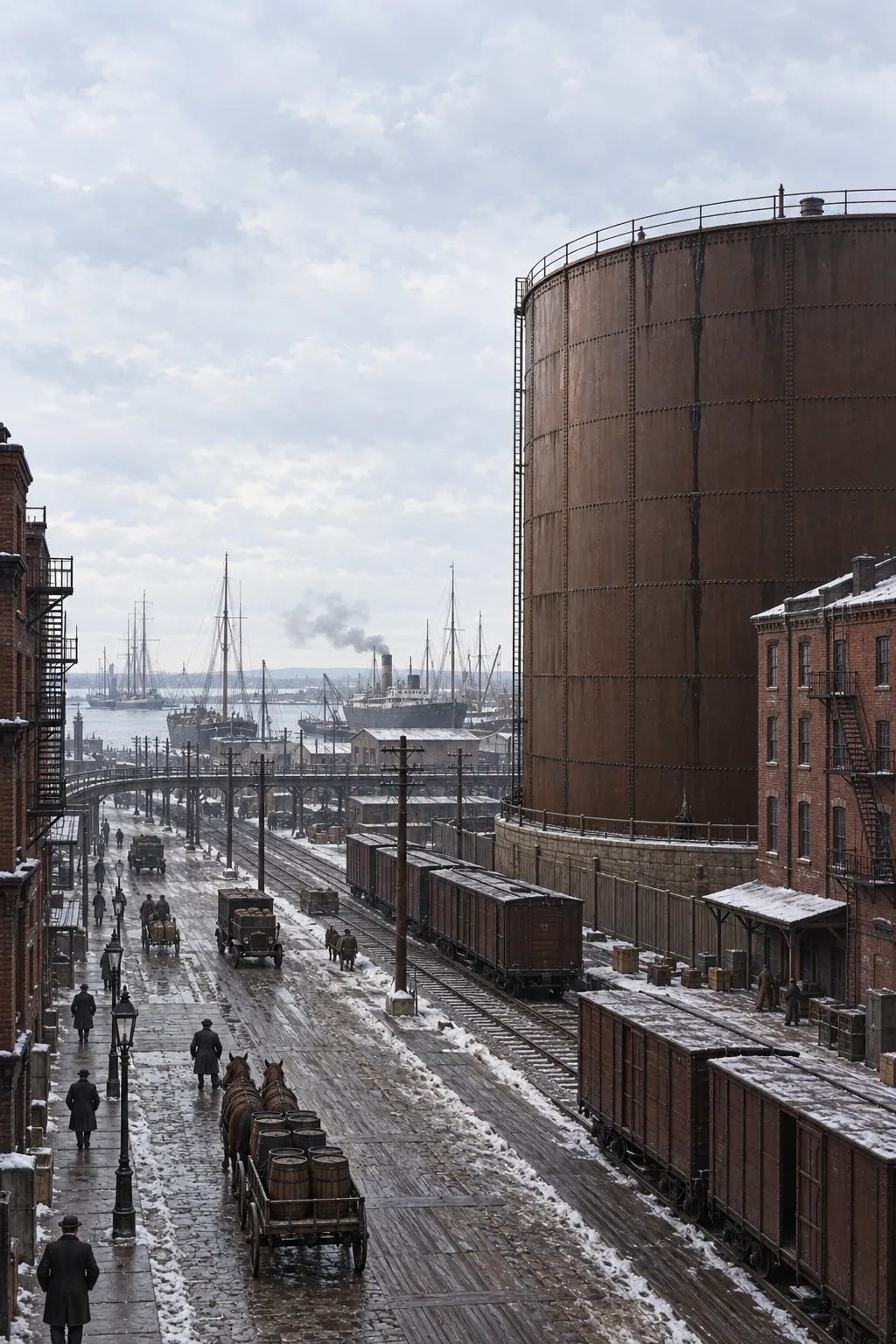
Why a molasses tank in Boston killed twenty-one people.
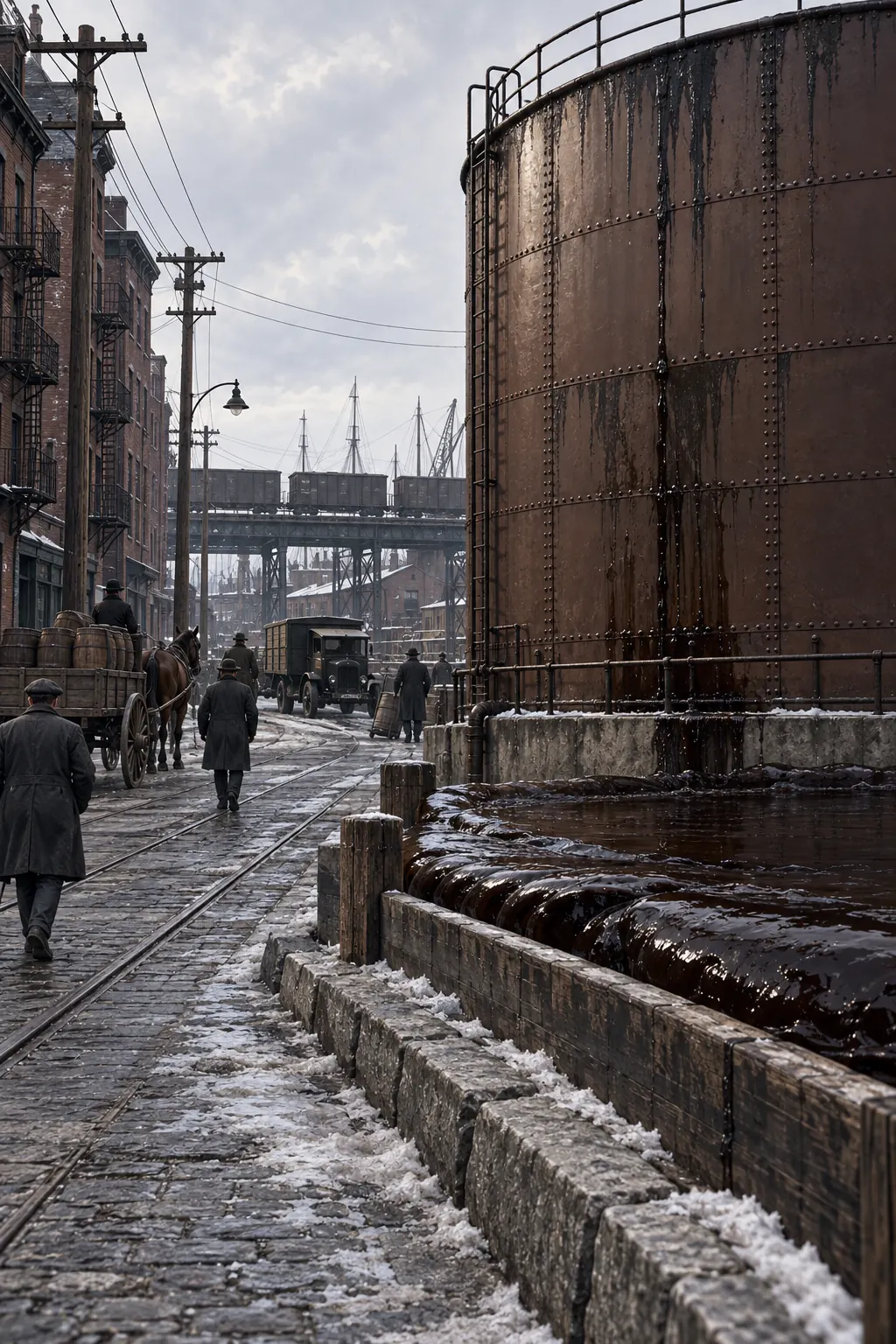
On 15 January 1919 the North End of Boston was wharves and rail track and tenements all pressed together. The day was mild for winter, and people were out on the street around midday.
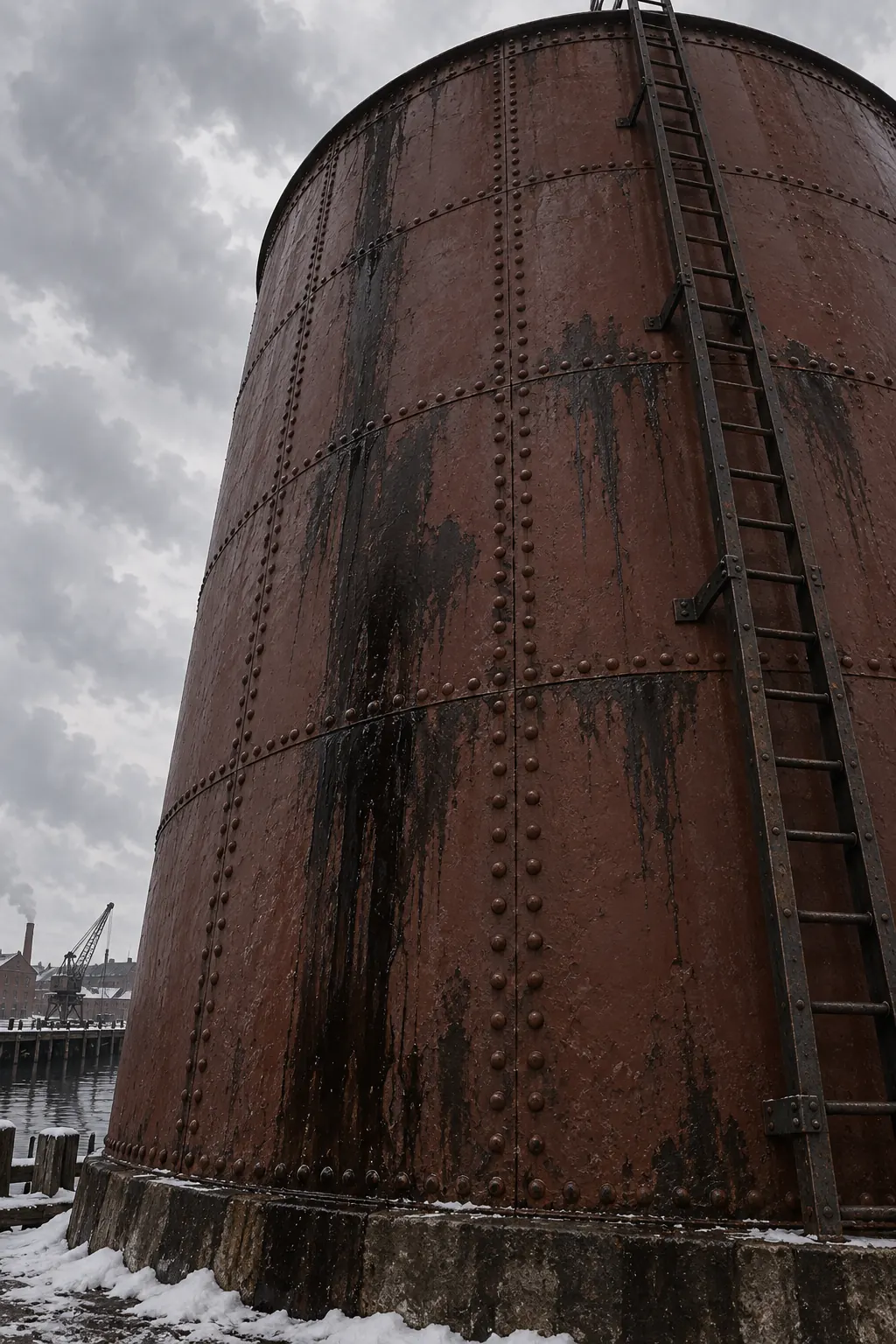
Beside that street stood a tank made of riveted steel plate. It was about fifteen metres tall and held more than 8.7 million litres of molasses, stored to be turned into alcohol.

The tank burst. The headline sounds like a joke and it was not one. Molasses is far heavier and thicker than water, and people caught in the flow were stuck in it waist-deep.
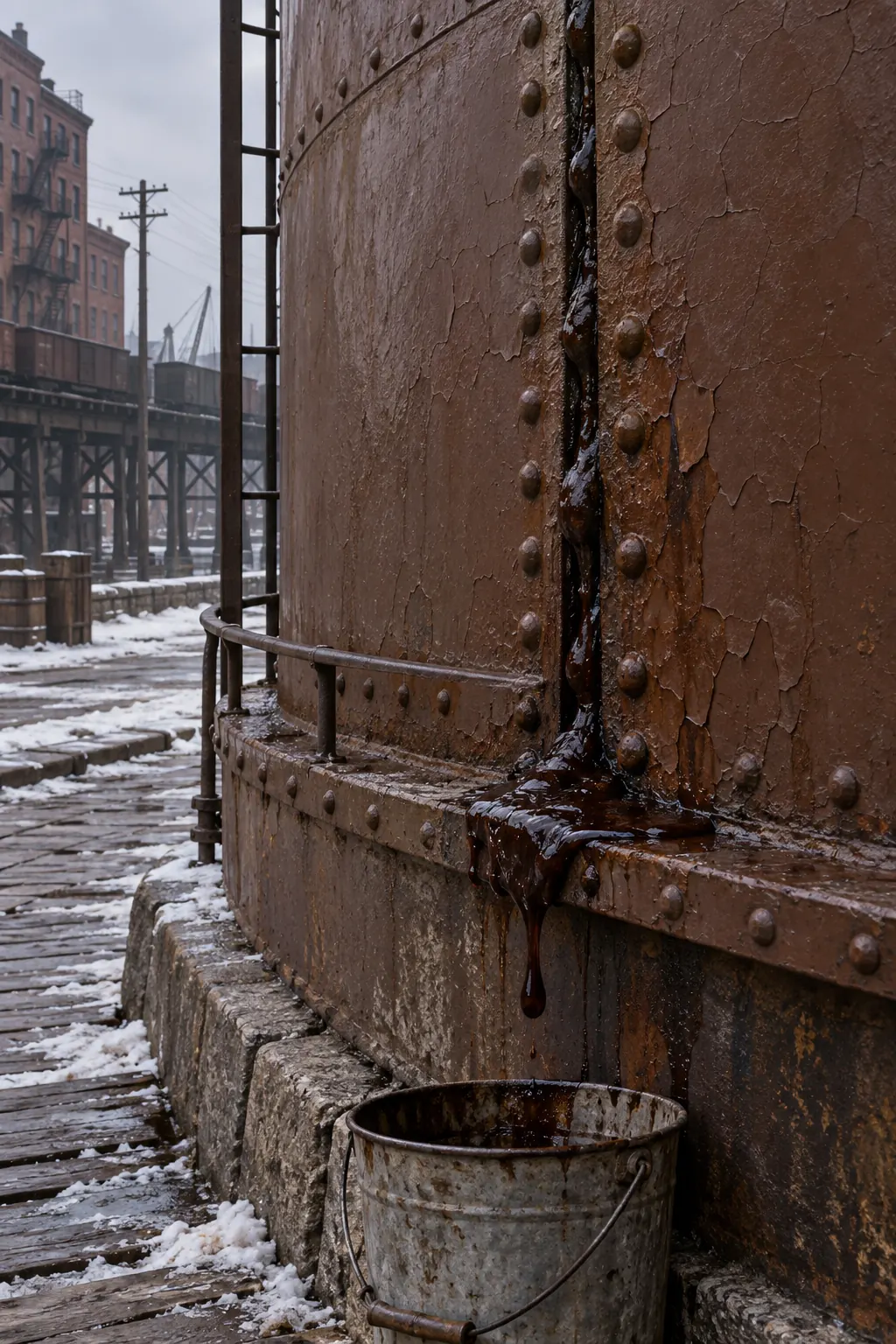
The tank had leaked from the day it went up. Neighbours came and collected what ran out of it. The company painted the tank brown so the seeps would not show.
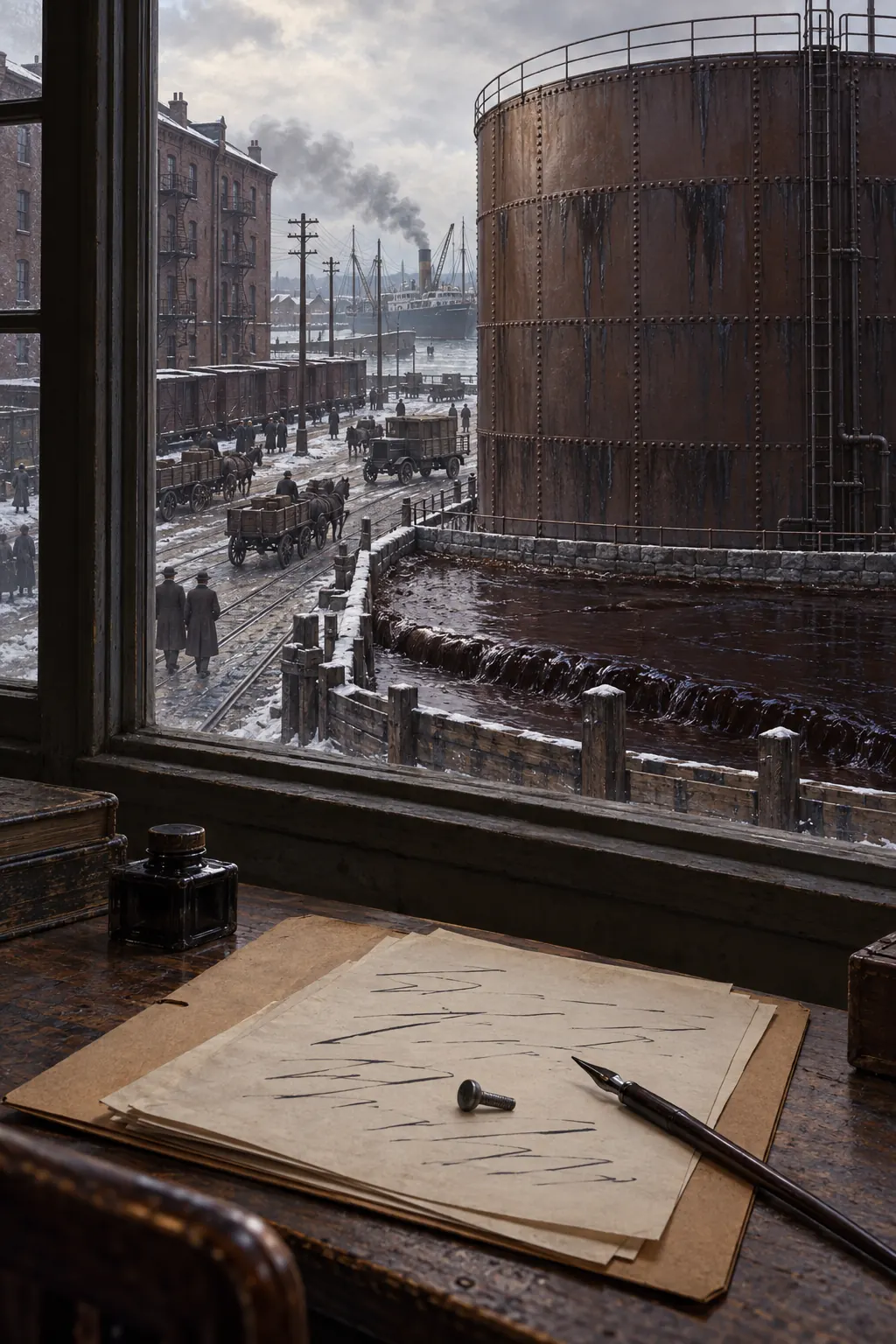
It had been put up in a hurry, and it never went through even the basic test of filling it with water. An employee had said the structure was unsafe. The company left it as it was.

The company argued that someone had set off a bomb. The mood of the time gave that claim a hearing. No evidence was produced to support it.

The victims' families took the company on. Before a court-appointed auditor there were 341 days of testimony, and the whole process took five and a half years. The finding in 1925 was that the tank had been unsound.
The case is often mentioned alongside the tightening of building inspection and engineer accountability in the United States. Saying this one event produced that shift, though, would be going too far.
What the records say
On 15 January 1919, an unusually mild winter day, a steel storage tank in Boston’s North End burst and released about 8.7 million litres of molasses. Twenty-one people were killed.
The American Physical Society’s account says the tank leaked from the start, that some neighbours collected the leaking molasses, and that the company painted the tank to hide the stains. Mass Moments notes that the tank was not tested before it was filled and that warnings about it were ignored.
The company said the tank had been sabotaged. A court-appointed auditor, Hugh Ogden, heard 341 days of testimony; after five and a half years he found no evidence of sabotage and concluded that the tank had failed structurally.
Sources
- "100 Years Ago Today: Molasses Crashes Through Boston's North End" — City of Boston www.boston.gov
- "Great Molasses Flood" — Mass Moments, Mass Humanities www.massmoments.org
- "Hugh Ogden Issues Report on Cause of the Molasses Flood" — Mass Moments, Mass Humanities www.massmoments.org
- "This Month in Physics History: January 15, 1919 — The Great Boston Molasses Flood" — APS News, American Physical Society www.aps.org
More stories

In 1859 a storm from the Sun ran the telegraph lines with the batteries unplugged
On 1 September 1859 Richard Carrington saw a white-light flare on the Sun. Within a day auroras filled the sky and telegraph operators worked without batteries.

The night of the Martian broadcast: most of America was not listening
On 30 October 1938 a radio play reported Martians landing in New Jersey. A ratings survey that night found only 2% of homes it called were listening.

Locked under the lead roof of the Doge's Palace, Casanova got out through the ceiling
In July 1755 Giacomo Casanova was locked in the Leads, the cells under the roof of the Doge's Palace. On 1 November 1756 he escaped across the roof.
Get the week in history
One email a week: the new articles, and what was happening elsewhere at the same moment. Free, no ads, unsubscribe any time. How we handle your email.
Text licensed CC BY-NC-ND 4.0. Found an error? Tell us.